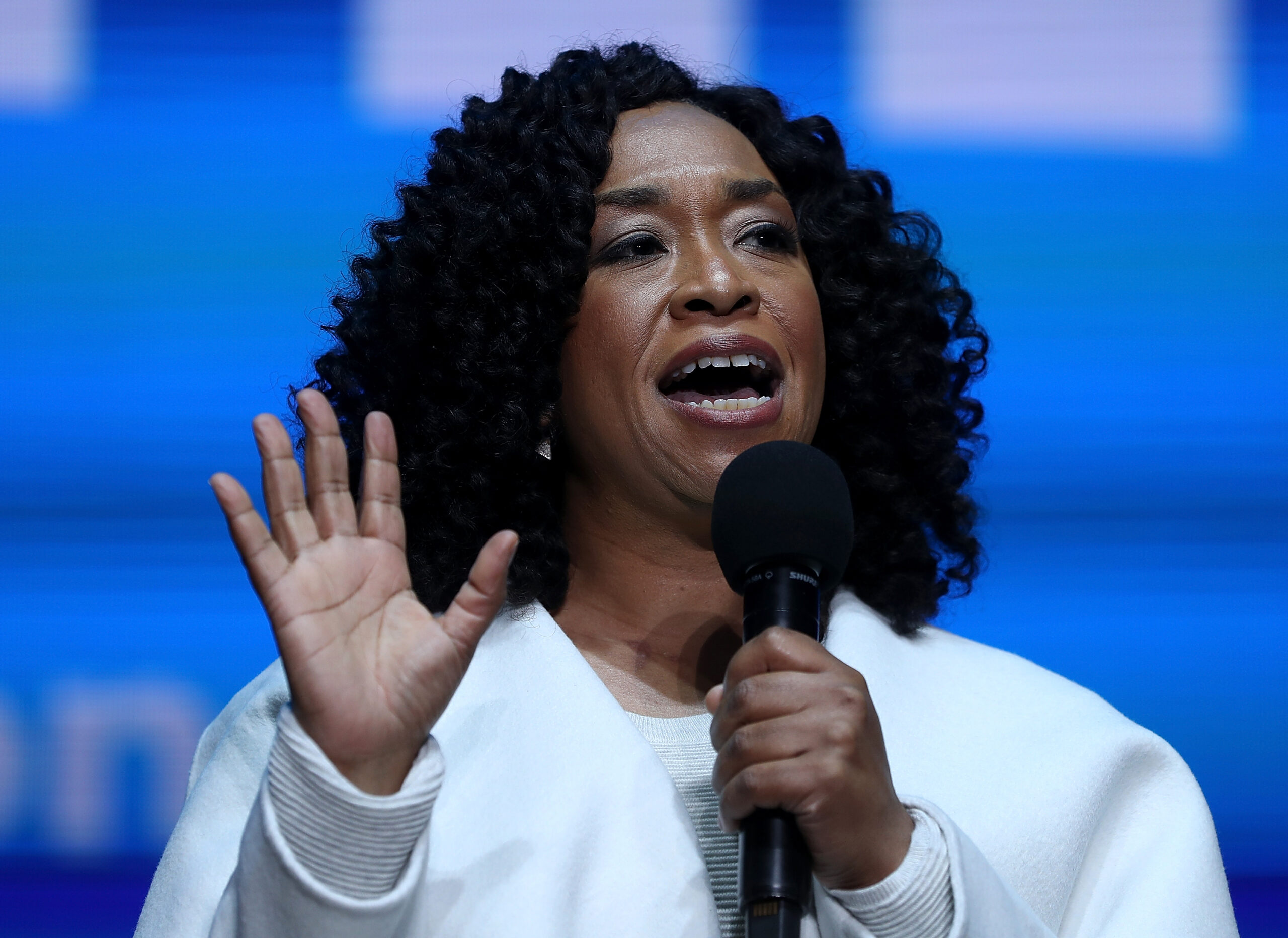
Shonda Rhimes is the founder of Shondaland, the production company behind hit series Grey’s Anatomy, Scandal, and How to Get Away with Murder. She became the first woman to create three television dramas that each surpassed 100 episodes. In 2017, Rhimes moved from network television to streaming, making a landmark deal with Netflix, said to be worth more than $100 million, and was inducted in Television Academy hall of fame She has built an estimated net worth of $250 million through her successful TV empire, production company and strategic business ventures: Photo by Justin Sullivan/Getty Images
Shonda Rhimes Secures New Five-Year Deal With Netflix
The new agreement keeps Shondaland at Netflix while extending the business relationship beyond television into film, gaming, merchandise, and live experiences.
Shonda Rhimes is expanding her entertainment empire at Netflix.
The television powerhouse, her Shondaland production company, and longtime producing partner Betsy Beers have renewed their overall deal with the streaming giant for another five years, extending a partnership that began in 2017. The agreement keeps Netflix as the exclusive home for Shondaland’s television and film projects while continuing opportunities in gaming, merchandise, and live events connected to the company’s intellectual property, reports TheWrap. The deal’s financial terms were not disclosed.
“I am excited to extend our relationship with Netflix,” Rhimes said in a statement. “For almost a decade, Netflix has provided Shondaland with the autonomy and support to tell our kind of stories—stories that both entertain and reflect diversity and humanity in a way that resonates with audiences around the world.”
Since moving to Netflix, Rhimes has helped build Bridgerton into one of the streamer’s most popular global franchises. The series has expanded beyond traditional television into consumer products and live experiences, demonstrating the business value of owning and developing entertainment properties that can travel across multiple revenue streams.
Netflix Chief Content Officer Bela Bajaria said Rhimes’ work demonstrates how a strong creative vision can become a much larger cultural and commercial enterprise.
“Few creative partnerships have shown what’s possible when a singular vision meets a global stage,” Bajaria said, according to Variety Australia. “Shonda’s instincts aren’t just brilliant storytelling—they’re a blueprint for what a hit can become.”
The Bridgerton franchise remains a major asset in that equation. Netflix recently confirmed that Season 5 is in production and scheduled for 2027, while the series has also been renewed for a sixth season.
Shondaland’s Netflix portfolio also includes Inventing Anna, The Residence, the Emmy-winning documentary Black Barbie, and Dance Dreams: Hot Chocolate Nutcracker. The renewed deal will also continue Netflix’s support for Shondaland’s Ladder Program, which helps train and create opportunities for underrepresented talent working in production.
“I am so thankful to Ted, Bela, and the entire Netflix team for their continued partnership, trust, and enthusiasm,” Rhimes said. “Let’s GO!”
Nearly a decade after bringing Shondaland to Netflix, Rhimes is proving that the real power move in entertainment is not to simply create a hit show. It is building an ecosystem around the stories, talent, and intellectual property that keep the business growing long after the credits roll.
The Cost of Autonomy: How Vic Mensa Is Building a Black Media Empire
The Chicago-born artist and entrepreneur breaks down how to navigate corporate partnerships and redefine economic power for Black creatives.
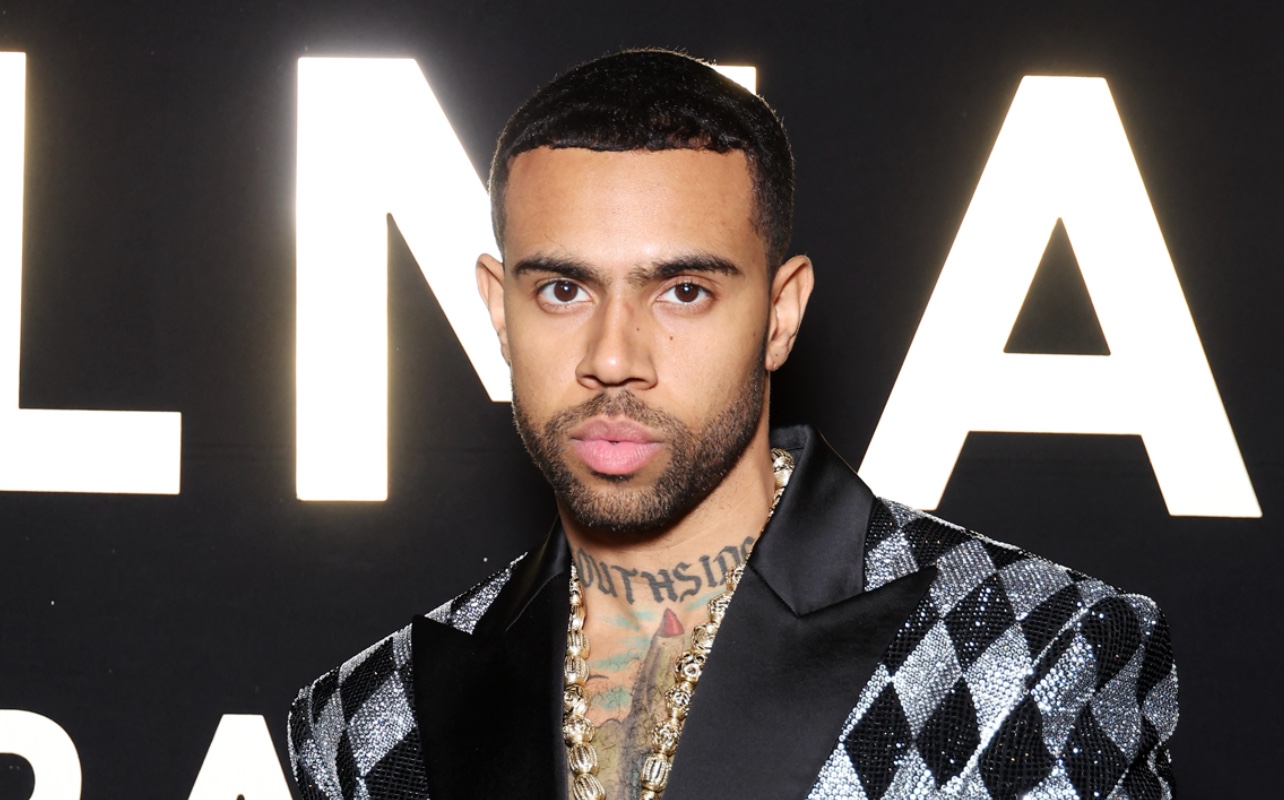
Vic Mensa has never been one to toe the corporate line. From his early rise as a Chicago rapper to launching his production banner, establishing Illinois’ first Black-owned legal cannabis brand, and hosting The Vic Mensa Show, Mensa’s career is a case study in creative self-determination.
In an era where corporate sponsors often demand sanitized narratives, Mensa continues to tackle systemic inequities, radical politics, and raw truth head-on. In this exclusive conversation with BLACK ENTERPRISE, Mensa dives into his vision for The Vic Mensa Show, the mechanics of IP ownership, and building business equity.
The questions and Mensa’s answers have been edited for clarity.
BE: The Vic Mensa Show tackles heavy topics like politics and systemic flaws. How do you navigate corporate sponsors and advertisers who might get nervous when you choose raw truth over corporate safety?
Mensa: The goal of the show is to maintain the authenticity synonymous with my brand and find partnerships that fit our politics. Relationships aren’t perfect, but some things just don’t make sense. We’ve had to pass on many deals because they simply don’t align, and that’s OK. You can’t sell your soul to the highest bidder. Some people might, but I couldn’t feel right doing that. It wouldn’t be me.
BE: How does your team determine which brands to work with? Are advertisers approaching you, or are you proactively seeking partners who align with social justice?
Mensa: It’s on a case-by-case basis. I’m not personally talking to advertisers—I’m focused on the ideas, the concepts, the words, the production, and the art itself. I’m blessed to have a great team that seeks out partnerships and opportunities that actually make sense for what we stand for.
BE: How did you partner with major platforms like Mass Appeal, YouTube, Spotify, and Apple for The Vic Mensa Show without losing control of your vision?
Mensa: Man, I gotta say I’m grateful to have great partners in it that can help to structure business and have just a good team putting together solid deals and working on my behalf, on our behalf, to maintain control and ownership over what we do, you know? And also, like, I came into it funding things myself, which also changes your dynamic too.
When you start by putting your own money on the line, it’s also a bit of a different journey, you know, than if all you have is an idea. I approach things, right now, from a place of tangible proof. Whatever I’m doing, if it’s a TV venture I’m working on, I went and shot a short film, which is almost like a digital pilot version of the TV show that I’m writing and pitching, so that I’m showing people something tangible.
It costs a lot, but it’s like I’m showing you the real thing. I’m not just coming to you with, like, an amorphous vision. I’m showing you, like, this is what I’m talking about.
BE: This season featured a formidable lineup—Chance the Rapper, Lena Waithe, Rapsody, Aja Monet, and Van Lathan. What’s the main takeaway you want audiences to gather from bringing these specific voices together?
Mensa: A dominant theme throughout this season is the cost of freedom—what is the price paid? Every guest has experienced that differently. Chance gave us a blueprint for the independent musician model. Van Lathan worked within legacy media, broke rank, and forged his own path. Aja Monet has organized alongside me and taught me so much about freedom movements. With her album, a portion of every dollar generated goes directly to women’s and girls’ organizations. It’s about reimagining how we operate within a system we are inherently part of.
BE: As these guests have built successful media footprints, are you looking to establish yourself as a broader thought leader or media personality alongside your music?
Mensa: With this show, my primary motivation is the conversation itself. Cody Chesnutt once told Chance and me, “Every conversation is a construction site. The primary question is: what are we building?” I don’t necessarily envision myself as a media personality. “Thought leader” sounds nice, but I don’t get caught up in labels. I’m just chasing my interests and remaining a student—reading, studying, and learning in public through dialogue with others.
BE: How has retaining your intellectual property (IP) changed how you monetize, take risks, and structure deals?
Vic Mensa: At this stage, owning your IP is everything. We’ve been sold a business model where we take upfront capital to cover immediate needs—like paying rent—and forfeit all backend profits. The result is that you rarely see money again.
Coming at this with experience changes the dynamic. Owning your IP allows you to move beyond basic survival, retain long-term value, and maintain control over your creative expression.
BE: How critical is direct support from your audience?
Mensa: None of this is possible without direct support from the people. Audiences are hungry for authentic storytelling, intellectual depth, and left-of-center Black politics.
BE: What is your advice for digital creators trying to convert social media views into long-term business equity?
Mensa: Focus on branding what you do and owning the means of production. For example, during the Orange Tree series, I wore apparel that I was actively producing and selling—not just promoting someone else’s brand. Don’t be a middleman for your own business; treat yourself as an enterprise.
Ideologically, focus on collective power. While capitalism won’t save us, we operate within it, so a dual-prong strategy is necessary: build sustainable equity while staying grounded in theory and collective community advancement.
BE: Looking at The Vic Mensa Show from a 30,000-foot view, how do you define success for the project?
Mensa: For me, success isn’t tied to arbitrary numerical benchmarks; it’s about consistency and longevity. If you execute at the highest creative level and sustain that work over time, long-term impact and business equity are inevitable.
Melissa Butler Is Offering Equity To Save Thread Beauty
Rather than shutting down Thread Beauty, Melissa Butler is betting that community and the right business partner can save the brand
Melissa Butler turned The Lip Bar from a lipstick that she made in her Brooklyn kitchen into a nationally distributed beauty business. But even seasoned entrepreneurs can struggle to get another venture off the ground.
Butler, who created The Lip Bar in 2012, revealed that she considered closing the cosmetic line she launched in 2022, Thread Beauty, last year after it failed to gain the same momentum as her flagship company. Target, however, encouraged her to keep going. Rather than shutting it down, Butler has taken an unconventional approach to revive Thread Beauty, revealing in a TikTok video that she’s giving someone else a chance to own part of the business.
I’m looking for a business partner for @threadbeauty! This is a rare opportunity to have ownership in a brand that has national distribution and a relevant value proposition (especially in a tough economy) without having to spend money up front! If you want to build something meaningful in the beauty space and be the face + part owner of @threadbeauty, I’d love to hear from you. Eligibility Requirements: -100k+ ENGAGED followers on a single platform -Ability to create compelling content -Deep Love for makeup + an aligned audience -US based This is a hands-on opportunity for someone who is ambitious, passionate and ready to grow. Serious inquiries only. Fill out the form on my site melissarbutler.com @Mel B
“It’s not working, which is kinda hard to say,” Butler said in the video posted on Aug. 10. “So, I thought about closing it last year, and Target was like, ‘No, Melissa, we still believe in this brand.’”
Thread Beauty launched at Target as an affordable and inclusive cosmetics brand aimed at younger consumers. The brand’s products, including blush, eyeliner, lip gloss, and complexion products, are all priced at $8.
“Thread is young, it’s fun, it’s very affordable. Everything is $8,” said the founder. However, she realized that the brand is missing community and connection.
“I underestimated that it really needed a face,” Butler said. “It really needed a human connection.”
Now, she is seeking a business partner who can also become the public face of the brand. In turn, she is offering equity in the company, which already has nationwide distribution through Target.
“I can’t be the face of Thread and The Lip Bar,” Butler said. “I am literally taking applications for not only a business partner, but a face of the brand.”
Butler’s move highlights a different approach to business growth and turnaround strategy. Rather than shutting down the brand or relying solely on additional capital, she is leveraging assets Thread Beauty already has: retail distribution, infrastructure, a robust social media audience, and an existing product pipeline.
Her announcement comes more than a year after The Lip Bar suffered from a decline in sales at Target after Black civil rights and religious leaders launched a nationwide boycott in 2025 to protest the retailer’s decision to roll back its DEI initiatives. In a social media video, she confirmed that sales at the big-name retailer dropped 30%.
“Our sales are down 30, 40%. Like that’s exactly what we thought was going to happen,” said the Detroit native, referring to the side effects she anticipated would happen in the wake of the boycott.
“That’s not to say that people should continue or go back to shopping at Target. It’s just to say that we knew that there was going to be a huge impact, and to offset the impact, it requires people to be really intentional about where they are shopping,” Butler added.
A new study published in Frontiers of Psychology last month found that fully remote workers reported being the happiest, while employees who worked entirely onsite reported the lowest. The research also found little evidence that working remotely weakened employees’ connections to colleagues or workplace culture.
Researchers analyzed 7,704 employees at a large healthcare organization, comparing fully remote, hybrid, and fully onsite workers. The study measured well-being across physical, mental, emotional, social, and financial dimensions and later compared those results with employee turnover data. Fully remote employees reported the strongest well-being, followed by hybrid workers, while fully onsite employees reported the lowest levels.
“Our findings challenge the idea that simply bringing people back into a building will automatically make them more engaged, connected, or likely to stay,” researchers Stefanie Johnson and Courtney Holladay told Fortune.
One year after the initial survey, employees with higher well-being were less likely to leave the organization, creating a potential business case for flexibility beyond employee preference. That matters for employers watching the bottom line, as employee turnover can carry significant costs, from recruiting and training to lost institutional knowledge and productivity. A 2019 Gallup analysis estimated that voluntary turnover was costing U.S. businesses $1 trillion annually.
Still, some of corporate America’s most prominent executives remain committed to return-to-office policies. JPMorgan Chase CEO Jamie Dimon has been a vocal advocate for in-person work, while Tesla CEO Elon Musk has also taken a hard line against remote work.
“The mistake is treating physical presence as the outcome rather than asking what organizations are trying to accomplish through it,” Johnson and Holladay told Fortune.
The researchers did not measure productivity, and the study focused on one large healthcare organization, meaning the findings may not translate equally across every industry or job function. But the research adds another data point to an increasingly important conversation for business leaders: whether showing up to an office is the same as building engagement.
For companies trying to retain talent and compete for skilled workers, the answer may be less about where employees work and more about whether the work arrangement supports them. As Johnson put it, employers should “design experiences that actually produce those outcomes.”
The remote-work conversation, in other words, may be bigger than office attendance. It is increasingly becoming a conversation about retention, workplace strategy, and whether companies are measuring the outcomes that really matter.
Groom Guy Brings Black-Owned Luxury Grooming To Marriott’s Autograph Collection
Groom Guy, founded by Darius Davie and Matthew Sears in 2020, operates inside the hotel's spa.
Black-owned luxury men’s grooming company Groom Guy is expanding its presence in the hospitality industry after the Washington hotel where it operates joined Marriott’s Autograph Collection, AfroTech reports.
The Potomac Hotel, Autograph Collection, formerly Salamander Washington DC, officially debuted under its new name on Aug. 5. The 373-room property is owned by real estate investment firm Henderson Park, with Salamander Collection Founder Sheila Johnson remaining a minority partner. Pyramid Global Hospitality assumed management of the hotel as part of the transition.
Groom Guy, founded by Darius Davie and Matthew Sears in 2020, operates inside the hotel’s spa. The company opened at the property in April 2025, before it transitioned to the Marriott portfolio. Marriott now lists Groom Guy among the experiences available at The Potomac Hotel.
The development gives Groom Guy a presence inside a property connected to Marriott Bonvoy, something Davie said had long been a goal.
“Today marks a new chapter for Groom Guy. We started as a 300 sq. ft. pop-up shop with a simple belief: men’s grooming services could become the next revenue anchor in hotels,” Davie wrote on LinkedIn, according to the outlet.
Groom Guy provides services including haircuts, beard trims, and hot towel shaves. Since launching, the company has completed more than 8,000 grooming services and generated at least $720,000 in sales, according to AfroTech.
The company also offers services at IHG’s Yours Truly DC Hotel. Its expansion into hotels reflects a business model centered on positioning men’s grooming as an additional hospitality service rather than operating solely through traditional barbershops.
The Potomac Hotel’s transition also brings the property into Marriott Bonvoy, allowing eligible guests to earn and redeem points and access other program benefits. The hotel retains amenities including its two-level spa and Dōgon, the Afro-Caribbean restaurant led by chef Kwame Onwuachi.
For Davie, the hotel’s transition represents another step in Groom Guy’s effort to expand its model within the hospitality sector.
“Moments like this remind me that when one door closes, another really does open,” Davie said. “We’re proud to be part of this next chapter and even more excited for what’s ahead as we continue reimagining the role of men’s grooming in hospitality.”
YouTube, LinkedIn And Substack Crack Down On AI-Generated Content
YouTube, LinkedIn, and Substack have introduced or expanded systems this summer to identify, label, or limit the distribution of certain AI-generated content.
Major digital platforms are increasing scrutiny of AI-generated content, putting new pressure on businesses and creators to be transparent about how they use artificial intelligence in public-facing work, Inc.com reports.
YouTube, LinkedIn, and Substack have introduced or expanded systems this summer to identify, label, or limit the distribution of certain AI-generated content. The moves come as platforms grapple with maintaining authenticity while generative AI makes producing text, images, and videos easier.
YouTube announced on May 27 that labels for photorealistic or meaningfully AI-generated or altered content would become more prominent. Labels appear below long-form videos and as overlays on Shorts. YouTube also began rolling out internal detection systems in May that can automatically apply labels when it detects significant photorealistic AI use and creators have not disclosed it.
LinkedIn has taken aim at what it describes as “AI slop,” or low-effort AI-generated content lacking original perspective. On July 30, the platform introduced an option allowing users to flag posts that “seem like AI slop.” More than one million people have used the feature, and LinkedIn Chief Product Officer Hari Srinivasan said members are seeing 40% fewer views of content the company classifies as AI slop compared with several weeks earlier.
Substack has also added AI detection. Its Pangram-powered tool can estimate whether eligible posts, notes, comments, and replies were written by a human or with AI assistance. The feature applies to content published on or after July 21. Publishers can disable detection on individual posts.
The developments are raising questions about how businesses should communicate their own AI practices.
In the Inc. column, brand and AI strategist Amy Zwagerman argued that companies should establish public AI policies explaining where they use the technology, how human judgment factors into AI-assisted work, how confidential information is protected, and what customers should know about a company’s AI use.
Zwagerman said establishing those guidelines could allow brands to define their approach before platform-generated labels or detection systems shape consumers’ perceptions for them.
As platforms expand their AI oversight, businesses using the technology may face greater pressure to explain not only whether they use AI, but how and why.
Rising Thrift Store Prices Have Some Donors Rethinking Goodwill
Pricing has become a particular point of frustration.
Some longtime Goodwill donors are reconsidering where they give used clothing and household goods amid concerns about thrift-store prices and a desire to provide items more directly to people in need, Yahoo Life reports.
An Aug. 15 report found that some donors are turning to shelters, community organizations, smaller charity thrift stores, and other nonprofits instead of automatically taking unwanted items to Goodwill. Their concerns include how donated merchandise is priced and where it ultimately ends up.
Pricing has become a particular point of frustration. Some shoppers have encountered secondhand clothing, furniture, dishes, and other household goods priced near or, in some cases, above the cost of comparable new merchandise, according to the outlet. For donors who expect secondhand goods to remain affordable, those experiences have prompted questions about where to take their donations.
Goodwill Industries International says pricing decisions are made within its network of independent local nonprofit organizations rather than a single national pricing system. The organization says stores seek to price donations according to fair market value in their local communities while maximizing the value of donated merchandise.
Some donors, according to Yahoo Creators, are instead choosing organizations that can distribute goods more directly. Options include homeless and women’s shelters, recovery programs, veterans organizations, and community nonprofits. Others give to local charity thrift stores that raise money for organizations such as schools, churches, hospices, and food pantries.
Habitat for Humanity ReStores can also accept certain furniture, appliances, building materials, and other household items, depending on the location. Online community groups offer another avenue for people who want to give belongings directly to others.
Goodwill says revenue generated through the sale of donated merchandise supports employment and workforce-development services. In 2024, 151 local Goodwill organizations helped 142,000 people secure employment and provided support to 2.1 million people across the U.S. and Canada, according to Goodwill Industries International’s annual report.
The organization also reported keeping 4.4 billion pounds of donated goods in circulation in 2024.
For some donors, however, the debate over thrift-store pricing is changing a once-routine decision into a more deliberate choice about where their donations can have the impact they want.
Older Women Entrepreneurs May Be Business’ Most Overlooked Growth Engine
Research shows that age and gender bias can still prevent older women in business from gaining access to opportunities and capital.
The startup world loves a young disruptor, but experience may be one of the most valuable assets when building a business. Women entrepreneurs over 50, however, continue to face both gender and age bias that can affect how customers, investors, and business leaders perceive their expertise and potential.
That disconnect matters because research has repeatedly challenged the notion that youth is the strongest predictor of entrepreneurial success. A study from MIT researchers found that the average age of founders behind the fastest-growing new ventures was 45. The research also found that prior experience in a specific industry was a strong predictor of entrepreneurial success.
For Meryl Rosenthal, who became a solo entrepreneur at 50 after her co-founder left their consultancy, that experience became a competitive advantage.
“What helped me move forward was the combination of everything that had come before: work ethic, business experience, perspective, adaptability, and confidence,” Rosenthal told Fast Company. “I was able to step fully into my own voice.”
Yet, Julie Wing, a 65-year-old serial entrepreneur and aviation business owner, found that experience does not always translate into opportunity.
“You have to prove yourself a lot more as a woman, and an older woman,” she told the publication. “Men don’t have to prove themselves.”
Research from Boston Consulting Group and MassChallenge found that startups founded or co-founded by women received less than half the average investment secured by male-founded companies. Still, the women-founded or co-founded businesses generated 10% more cumulative revenue over five years. For every dollar of funding, those companies generated 78 cents in revenue, compared with 31 cents for male-founded startups in the study. That creates a business case, not simply an equity argument.
Older women can bring industry knowledge, professional networks, management experience, and a clearer understanding of the problems they are trying to solve. Those advantages can be especially valuable in an entrepreneurial environment where execution matters just as much as the original idea.
Shubhi Rao, who founded an AI company at 54 after leaving corporate America, said that investment decisions can also be shaped by familiarity. “When you cannot underwrite the future,” she said, “you study the past.” Yet, if the past has disproportionately elevated young, male founders, relying too heavily on familiar patterns may cause investors to miss viable opportunities.
California To Require Financial Literacy Course For High School Students
California became the 26th state to require personal finance as a high school graduation requirement.
California high school students will soon have to learn how to budget, manage credit, invest, and navigate other financial decisions before receiving a diploma under a statewide financial literacy mandate, The Good News Network reports.
Assembly Bill 2927 requires California public high schools, including charter schools, to offer a separate, stand-alone, one-semester personal finance course beginning in the 2027-28 school year. Completing the course will become a graduation requirement starting with the class of 2030-31, according to the California Department of Education.
California became the 26th state to require personal finance for high school graduation, according to the Education Department. The law was approved in 2024 as part of a broader effort to equip students with financial skills before they enter adulthood.
The required curriculum covers 13 areas of personal finance, including banking, budgeting, employment and income, credit, loans, insurance, taxes, investing, consumer protection, and ways to finance higher education and workforce training. It also addresses how psychology can affect financial well-being and includes instruction on charitable giving.
The State Board of Education approved California’s Personal Finance Curriculum Guide on March 11, 2026, ahead of a May 31 statutory deadline. The guide is designed to help districts and educators develop courses that meet legal requirements.
“California is on track to deliver on the promise of personal finance education for every public high school student, which is great news,” State Superintendent of Public Instruction Tony Thurmond said. “These are critical life skills that will help them in their personal and professional lives.”
Schools are already preparing for the financial literacy mandate. As of May, 662 California teachers at 474 schools had completed more than 11,500 hours of personal finance professional learning through Next Gen Personal Finance, according to the Education Department. Twenty-one schools across 13 districts had also received grants to implement stand-alone courses ahead of the deadline.
The new requirement could also change how some students satisfy existing graduation standards. Beginning with the class of 2030-31, local education agencies may exempt students who complete the personal finance course from the state’s one-semester economics requirement.
How Companies Can Scale Without Losing Their Workplace Culture
Growth can make maintaining a cohesive culture more difficult.
Companies experiencing rapid growth can risk losing the workplace culture that helped drive their success as expanding teams, new departments, and additional layers of management create greater distance between employees and senior leadership, Fast Company reports.
Ron Johnson, a branding expert and keynote speaker, argues that businesses can counter those challenges by focusing on three areas: purpose, vision, and core values. In an Aug. 24 Fast Company column, Johnson described the principles as “brand anchors” that can help companies maintain employee engagement and organizational identity as they scale.
Growth can make maintaining a cohesive workplace culture more difficult. New employees may have less interaction with company founders, while additional managers and departments can complicate communication between executives and frontline workers, according to Johnson.
The first strategy is establishing a purpose that explains why a company exists beyond generating profits. Johnson cited Gallup research showing employees with a strong sense of purpose at work are 5.6 times as likely to be engaged in their jobs as workers with a low sense of purpose.
A clear vision, meanwhile, establishes where a business is headed. Johnson pointed to President John F. Kennedy’s 1961 challenge to land an American on the moon before the decade ended as an example of a specific goal capable of aligning people behind a shared objective. Research cited in the column also links clarity of organizational vision to job satisfaction, commitment, and employee engagement.
The third strategy centers on core values, which establish expectations for how employees operate while pursuing company goals. Johnson highlighted Southwest Airlines, whose stated purpose, vision, and employee promise are designed to reinforce its corporate culture and customer service standards. According to Southwest, the airline has ranked first in J.D. Power customer satisfaction among economy-class passengers for five consecutive years.
Johnson’s recommendations underscore a broader challenge for growing businesses: Expansion may require more organizational structure, but leaders must still communicate why the company exists, where it is going, and what it expects from employees.