Justice Department, medical school investigation, civil rights act
Photo by DNY59/Getty Images

Justice Department Finds UC Davis Medical School Discriminated In Admissions

The finding marks the latest action by the Justice Department as it scrutinizes medical school admissions policies


The U.S. Department of Justice ruled that the University of California, Davis School of Medicine (UC Davis) used admissions practices that unlawfully discriminated based on race. This concludes a federal investigation that examined the school’s applicant selection process, AFROTECH reports.

The finding marks the latest action by the Justice Department as it scrutinizes medical school admissions policies following the U.S. Supreme Court’s 2023 decision in Students for Fair Admissions v. Harvard, which barred colleges and universities from considering race in admissions decisions.

According to the department’s Civil Rights Division, a six-month investigation found that UC Davis relied on socioeconomic criteria that federal officials alleged served as proxies for race. Investigators said the school’s admissions framework, known as the Davis Scale, evaluated applicants based on factors such as family income, parental education levels, and whether they came from medically underserved communities.

Federal officials alleged the system adjusted the weight given to academic credentials, including grade-point averages and Medical College Admission Test scores, in ways that advanced racial diversity goals.

According to the Justice Department, admissions data from 2023 through 2025 showed significant disparities in acceptance rates among racial groups. Investigators said Black and Hispanic applicants were admitted at rates as much as six times higher than white and Asian applicants. The department also said some rejected white and Asian applicants had academic metrics comparable to or exceeding those of admitted applicants from other racial groups.

“Davis Med’s actions reflect both unabashed contempt for the rule of law and plain disregard for the potential public health consequences of putting race over merit, skill, and competence,” Assistant Attorney General Harmeet K. Dhillon said in a statement announcing the findings.

UC Davis disputed the allegations and said its admissions process complies with federal and state law.

“The report’s findings do not accurately reflect the school’s rigorous, individualized, and merit-based admissions process and our firm commitment to complying with applicable federal and state antidiscrimination laws. UC Davis is fully committed to meeting the critical healthcare needs of California, particularly those in underserved and under-resourced areas,” the university said according to CBS.

The university said it evaluates applicants through a holistic review process designed to identify candidates who can meet California’s healthcare needs and serve diverse communities throughout the state.

The investigation is one of several involving medical schools nationwide. The Justice Department recently announced similar findings involving UCLA’s David Geffen School of Medicine and Yale School of Medicine, and it recently opened investigations into 15 additional medical schools over potential race-based admissions practices.

RELATED CONTENT: Study Reveals HBCU Students Undergo More Hurdles In Gaining Admittance To Medical School

Graduation, HBCU,Nigerians, Boko Haram, International, Global, scholarships, scholarship
Photo by PeopleImages/Getty Images

High School Graduate Earns $17M In Scholarships, Accepted To 264 Colleges

School officials said the scholarship offers totaled more than $17 million.


A Georgia high school graduate received admission offers from 264 colleges and universities and more than $17 million in scholarships, WSB-TV reports.

Patrick Pruitt, a 2026 graduate of Woodland High School in Henry County, applied to 270 colleges and universities and was accepted by all but six, according to Henry County Schools.

School officials said the scholarship offers totaled more than $17 million, placing Pruitt among a small group of students nationwide who have garnered multimillion-dollar scholarship awards during the college admissions process.

Pruitt graduated with a 3.8 grade-point average and a 4.2 weighted grade-point average while completing advanced coursework. He also finished among the top 10% of his graduating class.

“You want to open yourself up to as many opportunities as possible,” Pruitt said. “I just used what strengths I had to offer.”

School officials also said his 1200 SAT score made him eligible for several state-funded scholarship opportunities.

In addition to his academic achievements, Pruitt competed on the varsity cross-country and track and field teams and completed an internship with the Henry County Water Authority. His interest in environmental issues and water conservation helped shape his college search and academic goals.

Pruitt said he initially set a goal of earning admission to 100 colleges. He later expanded that objective after learning of another Georgia student who received more than 200 college acceptance offers.

His school counselor, DeAnna Miller-Wooden, said his success was the result of determination and careful planning throughout the application process.

“Patrick Pruitt is proof of what can be achieved if you dig deep and seek opportunities,” Miller-Wooden said. “We are all very proud of him.”

Pruitt plans to attend Knox College in Galesburg, Illinois, this fall. He received a scholarship package valued at about $260,000 from the private liberal arts college and said he intends to continue pursuing additional scholarship opportunities to help cover future educational expenses.

RELATED CONTENT: ‘Making A Difference’ Initiative Invests Millions In Student Scholarships

Fisk University
photo credit: Fhaywood25, CC BY-SA 4.0 via Wikimedia Commons

Fisk University Moves Forward With Innovation Center, Promises Community Transparency

The proposed facility is a key component of Quantum Leap, a long-term campus development initiative.


Fisk University has plans to move forward with a proposed 100,000-square-foot Innovation Center in North Nashville, responding to community interest and concerns by pledging transparency and minimal impact on surrounding neighborhoods, according to the university.

The proposed facility is a key component of Quantum Leap, a long-term campus development initiative that Fisk describes as the most extensive master plan in the university’s 160-year history. According to the university, the project would include a 70,000-square-foot technology center and a 30,000-square-foot academic facility designed to expand access to technology, workforce training, and educational opportunities.

The statement comes as community members and alums have raised concerns and are seeking additional information about the project’s potential effects on the surrounding area. Critics of the center say the potential pollution and strain on local water and energy resources aren’t worth the investment.

“Fisk University understands and appreciates the community’s response to and interest in Quantum Leap and the Innovation Center,” the university responded in its statement. “Our North Nashville neighbors have played a critical role in that history, but also remain essential to our future. We would never cause harm here.”

University officials said planning for the broader Quantum Leap initiative has been underway for approximately two years and has included input from students, faculty, alumni, board members, and community partners. Fisk said it is continuing outreach efforts and inviting community leaders to learn more about the proposal and participate in discussions about the project.

According to the university website, the Innovation Center is intended to strengthen digital infrastructure and help address gaps in access to technology and workforce development opportunities. Officials said expanding access to technology is increasingly important as advancements in the field continue to outpace availability in many communities.

Fisk said community impact has been a guiding consideration throughout the planning process.

“Since Quantum Leap’s inception, our plan for the Innovation Center has been guided by a ‘do no harm’ philosophy, and we remain fully committed to total transparency, disclosure and accountability every step of the way,” the website reads.

The university added that the facility is being designed to operate without creating additional burdens for nearby residents, calling that objective a “non-negotiable design requirement.”

Fisk officials said they will continue engaging with residents and providing project updates as planning for the Innovation Center progresses.

RELATED CONTENT: Fisk University Students Win $40K Scholarship In Experian Financial Pitch Contest

Maryland, reparations
Photo by Daniel Lobo/Flickr

A Battle For Wealth Equity: Inside The Push for Real Reparations

10 Black Reparations initiatives


Economic empowerment has always been the cornerstone of true liberation, but for Black Americans, the systemic baseline of generational wealth has been repeatedly compromised by policy. NAACP’s resolution lays out a definitive, historically grounded blueprint for federal reparations, framing it not as a handout, but as a mandatory correction for centuries of economic pillaging.

From the calculated reversal of Gen. Sherman’s 1865 “40 acres and a mule” directive—which stripped away 400,000 acres of self-governing coastal land from newly freed people—to modern agricultural subsidy disparities, the document charts how systemic racism built the current economic divide. Today, with the wealth gap projected to take an astronomical 228 years to close without aggressive intervention, the resolution outlines a concrete framework for a national reckoning. By establishing clear eligibility guidelines, demanding stakes in emerging markets such as the cannabis industry, implementing tax-exempt land grants, and adjusting retirement-age benefits to account for health disparities, this proposal presents a comprehensive business plan for racial equity and structural atonement.

Check out these ongoing 10 Black Reparations initiatives across the country:

RELATED CONTENT: New York Reparations Hearing Erupts As Descendants Of African Slaves Clash With Liberal Organizations

Sticky Mobile-Friendly Navigation with Click Dropdown

BE SMART HACKATHON 2026

DATE

NOV 18-21, 2026

LOCATION

Hilton Charlotte


The 2026 BE Smart HBCU Hackathon features students from historically Black colleges and universities (HBCUs) to compete in what some call the new résumé. This group of top talent demonstrated how well they collaborate, how quickly they think, how they fail fast and learn faster, and articulate their ideas in public. Congratulations to our 2025 1st place team, Alabama State University

Shape the future of innovation

Sponsor the 2026 BE Smart HBCU Hackathon and connect with the brightest emerging tech talent.
Watch top students showcase their skills in real time and secure your role in building the next generation of tech leaders.

Hackathon Partners

2025 COMPETITORS

HBCU Duo ,Ramadan, Alabama A&M
Jacques Curtis, Shaw

content

2025 rECAP VIDEO

2025 PHOTOS

ARTICLES

Hackathon Skill Preparation

Problem-solving

(ability to break down complex problems)

A programming language

(i.e., Python, Java, JavaScript, etc.)

APIs

(Creating and consuming web services)

Web development

(i.e., HTML, CSS, Frontend frameworks/libraries)

Version control

(Git/GitHub)

Mystikal, sexual assault
photo credit: Getty Image

Karmelo Anthony Fundraiser Removed After Murder Conviction And Raising $630,000

Anthony's legal team has reportedly begun the appeals process


The online fundraising campaign created for Karmelo Anthony, the Texas teenager convicted in the fatal stabbing of fellow student Austin Metcalf, has been removed from crowdfunding platform GiveSendGo after raising more than $630,000, reports the New York Post.

Anthony, now 19, was convicted June 9 of first-degree murder in the death of 17-year-old Metcalf, who was fatally stabbed during an altercation at a high school track meet in Frisco, Texas, in April 2025. Anthony was tried as an adult even though he was only 17 at the time of the incident and claimed that he was acting in self-defense. The jury, however, deliberated for less than three hours before convicting him and later sentencing him to 35 years in prison, reports CBS News.

Following the verdict, GiveSendGo, a crowdsourcing platform that allows fundraising for those involved in criminal cases, confirmed that the “Help Karmelo Anthony Official Fund” had been closed since it was originally established to support Anthony’s legal costs, and the funds had already been distributed.

“The fundraiser was supported to support pre-trial needs, and those funds were disbursed over the last year,” read a statement to The NY Post. “With that stated purpose complete, the fundraiser has been closed.”

The fundraiser exceeded $630,000, with more than $4,000 in donations being made even after Anthony was convicted.

The platform added that a fundraiser does not constitute an endorsement of a defendant or their actions.

“Hosting a campaign has never been an endorsement of a person, their actions, their legal arguments, or their public statements,” GiveSendGo’s statement read. “It is not a declaration of innocence and it is not a political statement. GiveSendGo provides access to lawful fundraising, which we extend across the full spectrum of cases,” it added. “Our hearts are with Austin’s family, his twin brother, and everyone grieving a loss that no verdict can undo.”

Although the original campaign has been removed, Anthony’s legal team has reportedly begun the appeals process. In its statement, GiveSendGo indicated that the family could launch another fundraiser to help cover appellate legal expenses, provided it complies with the platform’s terms of service.

“The family will be able to set up a new campaign if they desire as long as it aligns with our terms of service,” the company said.

The case has fueled national debate over race, criminal justice, and online fundraising. Anthony’s supporters and family members have argued that the Black teenager faced disproportionate scrutiny for the killing of a white student. The controversy was further amplified by the composition of the jury, which did not include any Black jurors.

RELATED CONTENT: Karmelo Anthony Finishes With 3.7 GPA, But Can’t Attend Graduation

Women Entrepreneurs Share The Secret of Their Success
(Photo: Hispanolistic/Getty Images)

Mid-Career Women Are Leaving Corporate America To Build Their Own Paths

A growing number of women are walking away from traditional corporate careers and choosing entrepreneurship and independent work.


After years of climbing the corporate ladder, many mid-career women are deciding the next step in their careers isn’t another promotion—it’s ownership.

According to a recent Forbes report, women who once pursued executive titles and leadership roles within large corporations are increasingly leaving traditional workplaces to launch businesses, build consulting practices, and create independent careers that offer greater autonomy and control. The shift comes amid growing dissatisfaction with corporate structures that many women say have failed to deliver the power, influence, and security they were promised.

Channing Martin, a former global chief diversity and social impact officer, told Forbes that her perspective changed after losing her job following a corporate acquisition.

“I had to come to the realization and the acceptance that I wasn’t as powerful as I thought I was,” Martin said. “These corporate systems and structures aren’t designed to do what I want to do.”

For many women, the frustration goes beyond burnout. Forbes reports that Deloitte’s Women @ Work 2025 survey found only 5% of women expect to remain with their current employer for more than five years, while roughly four in 10 anticipate leaving within one to two years. Opportunities for advancement ranked as the top factor women said would help them succeed.

The changing economic landscape is also influencing career decisions. Forbes notes that employers announced approximately 1.2 million job cuts in 2025, while tech companies alone eliminated more than 52,000 positions during the first quarter of 2026 amid increased use of AI in operating systems.

As confidence in long-term corporate stability declines, more women are betting on themselves. According to data cited by Forbes, women launched 44% of new businesses in 2025, up significantly from 29% in 2019. Meanwhile, the number of independent professionals earning more than $100,000 annually has surged since 2020.

For former corporate leaders such as Toni Ronayne, founder of a collective for fractional chief executives, independence offers a sense of security that traditional employment no longer guarantees.

“Fractional leadership provides a certain level of autonomy,” Ronayne told Forbes. “You get to choose who you work with.”

RELATED CONTENT: Black Women Feel The Brunt Of AI Disruption And DEI Rollbacks Disproportionately

plumbing
photo credit: pexels

Service Businesses Monthly Revenue Typically Stalls Under $100K And Here’s Why

The $100K ceiling Is an operations problem, not a demand problem


A plumber I work with in Tampa hit $84,000 in monthly revenue three months in a row last summer, then watched it slide back to $61,000 by October. He hadn’t lost customers. He’d lost track of which jobs were actually paying him. That story is closer to the norm than the exception. Only about 4% of all U.S. firms ever cross the $1 million annual revenue mark, which is roughly the $83K–$100K monthly threshold most service operators chase. The median revenue for employer firms sits around $400,000 per year, or about $33K/month. The gap between those numbers is where most service businesses live, and where most of them get stuck.

I’ve spent the last decade working alongside owners in HVAC, electrical, plumbing, fire service, locksmith, and lawn care. The patterns that cause businesses to plateau before six figures a month are remarkably consistent across trades, and almost none of them are about marketing or sales. They’re about operations: how jobs are scheduled, how labor is tracked, how invoices move, and how the owner spends their day. This piece walks through the technical reasons growth stalls at this revenue band, with specific attention to the realities Black founders in service trades face given tighter access to capital and thinner reserves to absorb operational mistakes.

The $100K Ceiling Is an Operations Problem, Not a Demand Problem

Most owners who stall between $50K and $100K a month assume they need more leads. When I dig into their numbers, the leads are usually fine. The conversion is fine. What’s broken is throughput, the number of completed, billed, and collected jobs per week.

A 2024 Jobber survey found that home service businesses using scheduling and dispatch software completed about 20% more jobs per day than those still booking manually. Verizon Connect’s 2024 fleet data showed route optimization cut driving time by up to 20% and lifted completed jobs by 15%. These are not small numbers. A three-truck HVAC shop running 12 jobs a day instead of 10, with an average ticket of $380, adds roughly $19,000 in monthly revenue from the same crew, the same trucks, and the same phone lines.

The technical bottleneck is usually one of three things: jobs scheduled too close together, jobs scheduled too far apart geographically, or technicians arriving without the parts and information needed to finish on the first visit. Each of these has a measurable cost. Across our customer base, HVAC contractors who switch from paper work orders to mobile-first dispatch typically see their first measurable gains in same-day job completion within the first 60-90 days, with the largest jump showing up in maintenance call volume rather than installs. The reason is structural: maintenance calls are short, predictable, and route-sensitive, so they benefit disproportionately from better sequencing.

Owners running paper work orders or text-message scheduling almost always underestimate the dead time between jobs. A dispatcher juggling 18 calls and a whiteboard cannot optimize route order in real time. By the time the schedule is built at 7 a.m., it’s already wrong.

Job Costing Is Where Margin Quietly Disappears

The second reason businesses stall is that revenue grows faster than the owner’s understanding of which jobs are profitable. Intuit’s 2024 Small Business Data Index found that 54% of service-based small businesses do not regularly calculate job- or project-level profitability. They rely on gut feel and quarterly tax returns. By the time the books close, the loss-making jobs are already done, and the underpriced contract is renewed for another year.

Labor is where the leak usually starts. A 2024 Service Council survey found that only 38% of field-service organizations track fully burdened labor costs at the work-order level. “Fully burdened” means wage plus payroll taxes, plus workers’ comp, plus vehicle cost allocation, plus benefits. If you’re pricing off a raw hourly rate of $32 when the loaded cost is $54, every job is closer to break-even than your quote sheet suggests.

This matters more now than it did five years ago. BLS data show hourly compensation in service-providing industries rose 12.7% from Q1 2021 to Q1 2024, and that wage pressure is not reversing. If your job costing was loose in 2021, the same looseness in 2026 is the difference between a 22% gross margin and a 9% one.

What to track at the work-order level, at minimum:

  • Total technician hours on site, including drive time
  • Material cost pulled from actuals, not estimates
  • Subcontractor or helper cost, if applicable
  • Travel cost allocated by mile or by hour
  • Any callback or warranty time billed back to the original job

Without these five numbers per job, you cannot tell which customer segments, which job types, or which technicians are actually making you money. You’re flying on revenue alone, and revenue lies.

The Reporting Gap: Operating Blind at $60K–$80K a Month

Around the $60K to $80K monthly band, complexity outruns the owner’s ability to hold everything in their head. This is the point where most operators need dashboards, and most don’t have them. A 2024 Xero survey found that only 39% of small businesses use any form of business dashboard or KPI tracking, and adoption is lower among firms under $1M in revenue.

The metrics that actually predict whether a service business will break through $100K/month are not the ones owners typically watch:

  • Revenue per technician per day, not revenue per month. Monthly numbers hide which weeks were strong and why.
  • First-time-fix rate. Every callback is a job you’re paying for twice.
  • Days to invoice, measured from job completion to invoice sent. Two days versus nine days is the difference between healthy AR and chronic cash crunch.
  • Days to pay, measured from invoice sent to payment received.
  • Dispatcher load, meaning jobs scheduled per dispatcher per day. There’s a ceiling, usually around 35 to 45 jobs per dispatcher, beyond which scheduling quality collapses.

McKinsey’s 2023 research on service operations found companies using real-time performance dashboards improved productivity by 10–15% and customer satisfaction by 20–30%. The mechanism is simple. When you can see the dispatcher load climbing on a Tuesday afternoon, you can shift two jobs to Wednesday before the day falls apart. When you cannot see it until Friday’s weekly meeting, the damage is already done.

Deloitte’s 2024 SMB finance study found that 45% of growing small businesses still rely primarily on spreadsheets, and those firms reported twice the rate of unexpected cash shortfalls. A spreadsheet is fine until it isn’t. The crossover usually happens around 200-300 jobs per month.

Cash Flow Friction: The Slow Bleed That Caps Growth

Revenue growth without cash flow discipline is how owners end up with a great year on paper and an empty operating account in December. QuickBooks research found that U.S. small businesses carry an average of $78,355 in outstanding invoices, with 48% of invoices overdue. For a service business doing $80K/month, that is roughly a full month of revenue sitting in receivables.

This problem is sharper for Black-owned firms. A 2023 Hello Alice survey reported that more than 60% of Black small-business owners experienced late payments from customers, compared with 48% overall. When that late-payment friction stacks on top of the Federal Reserve finding that only 35% of Black-owned employer firms received all the financing they sought, compared with 49% of white-owned firms, the working capital squeeze becomes structural. You cannot hire the fourth technician you need to grow because the cash to fund their first two payroll cycles is parked in unpaid 60-day invoices.

The technical fixes are well understood. Billtrust’s 2024 analysis found that e-invoicing and digital payments reduced days sales outstanding by an average of 6 days for SMEs versus paper-based invoicing. Six days is not glamorous, but at $80K/month in billings, that’s roughly $16,000 in cash pulled forward each month, every month.

Specific moves that compress the cash cycle:

  • Invoice from the field at job completion, not from the office that evening. Same-day invoicing changes payment behavior.
  • Offer card and ACH on every invoice, not just on request. Friction kills collection rates.
  • Set automated reminders at day 7, day 14, and day 21. Most overdue invoices are not disputes; they’re simply forgotten.
  • Require deposits on jobs above a defined threshold, often $1,500 or $2,000 depending on the trade.

The estimate-to-cash cycle matters too. We’ve observed across contractors using our platform that electricians running residential service work tend to convert estimates to signed jobs at meaningfully higher rates when the estimate reaches the customer on the same day as the site visit, rather than 24-48 hours later. The mechanism is psychological: the homeowner is still in the mindset that the work needs to be done. By Tuesday morning, three other priorities have crowded out the electrical panel upgrade.

The Owner Bottleneck: When the Business Cannot Grow Past You

The hardest constraint to fix is the owner’s calendar. The Service Council’s 2024 report found that 52% of small field-service organizations have owners who still perform service work themselves at least three days per week. If you’re billable three days a week, you have two days for everything else: hiring, sales, vendor relationships, AR, compliance, equipment maintenance, and strategy. That math does not produce a $100K/month business.

The transition out of the truck is brutal, especially for owners who built the business on their personal craft and reputation. But the data on what makes the transition possible is consistent: documented processes. A 2023 SCORE survey found that 66% of small businesses without documented standard operating procedures reported “difficulty delegating” as a top challenge, versus 37% of those with SOPs. Process documentation is unglamorous, but it’s what enables the second and third technicians to produce work that meets your standards without your physical supervision.

There are specific verticals where account structure does more for growth than any sales activity. Across our customer base, traffic control and fire service companies serving repeat commercial accounts get more leverage from structured client records, site contacts, access details, and contract terms than from any sales-focused feature, since growth in these verticals is account-led. The pattern is the same in property management contracting and in commercial pool service. If your growth comes from doing the next job at an existing site, the system that wins is the one that captures every detail about that site so any technician can show up and execute.

Burnout is the other side of the owner bottleneck. A 2024 Small Business Majority survey found that 52% of owners reported feeling burned out, with 35% saying they had delayed growth plans due to stress, and higher rates among Black and Latino owners. A burned-out owner does not make good operational decisions, does not invest in systems, and does not delegate. The plateau holds.

The Capital and Technology Gap That Makes This Harder

Black founders building service businesses face a tighter version of each of the problems above. The Federal Reserve’s 2022 Survey of Consumer Finances showed median wealth for Black families at $44,900, compared with $285,000 for white families. That gap is not abstract. It’s the difference between being able to float a $40,000 payroll for two weeks during a slow January and having to factor receivables at 18% to keep the lights on.

Technology adoption also lags. A 2023 NMSDC report found that only 41% of Black-owned small businesses reported using industry-specific software, compared with 61% of non-minority peers. Some of that gap is access. Some of it is vendor outreach. Some of it is the rational caution of an owner who has seen too many tools sold on hype and abandoned within a year. The result is that operators who would benefit most from scheduling, costing, and reporting systems are often the last to adopt them, and the plateau holds longer than it should.

Two practical observations from my own work. First, the highest-leverage technology investment for most service businesses under $100K/month is the one that compresses the invoice-to-cash cycle. It pays for itself in weeks, not years, because it directly addresses the working capital constraint. Second, the second-highest-leverage investment is whatever forces the owner to review job-level profitability weekly rather than monthly. The behavior change matters more than the specific tool.

There are also vertical-specific patterns worth knowing. In our customer base, locksmith operators handling automotive lockouts almost universally cite GPS-verified arrival timestamps as their most-used feature when pushing back on chargebacks and disputed service calls. Based on Field Promax usage patterns, fire service companies running quarterly and annual inspection routes get the most leverage out of recurring work order templates, since the same site can generate 4-12 scheduled visits per year with near-identical task lists. These are not generic productivity gains. They’re trade-specific operational realities that determine whether a given system actually moves the business forward.

What to Reflect On

The $100K/month ceiling is not a marketing problem and rarely a demand problem. It’s the point at which the operational habits that built the business to $50K start to fail, and the owner has to choose between working harder within the existing system or rebuilding the system itself. The owners I watch break through that ceiling are the ones who stop measuring success by monthly revenue and start measuring it by revenue per technician per day, days to invoice, days to pay, and how many days a week they personally need to be in the field. Those four numbers, tracked weekly, predict the next twelve months better than any sales forecast.

About the Author

Joy Gomez is an engineer, process automation expert, and the Founder of Field Promax. Known for his technical expertise and commitment to field service innovation, Joy writes about transforming traditional business models into paperless, efficient operations. He is a Lean Six Sigma Black Belt based in Rochester, Minnesota, dedicated to helping field professionals work smarter through better technology. Connect with him on LinkedIn.

Black businesses, report, growth, Starting businesses, economy,
(Photo: iStock)

Time-Tested Advice Entrepreneurs Need To Hear — To Succeed!

It’s a strategy Nicholas Dillon used since starting his business.... and you get it for free.


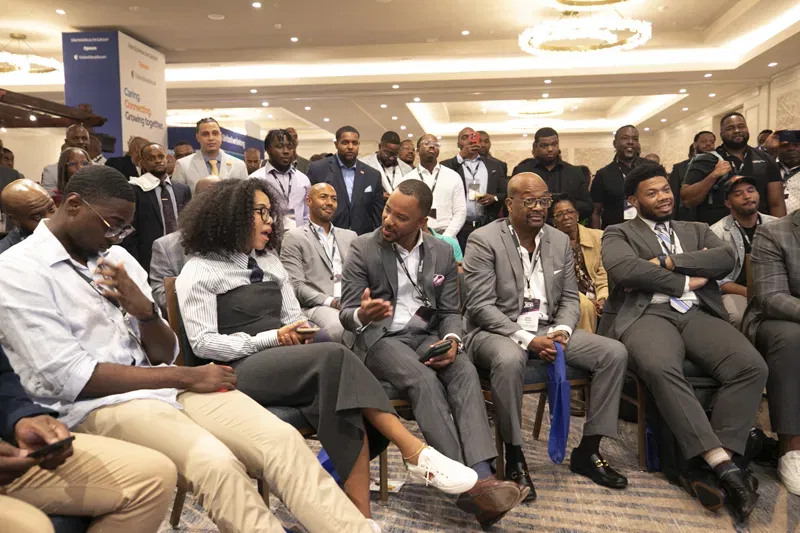
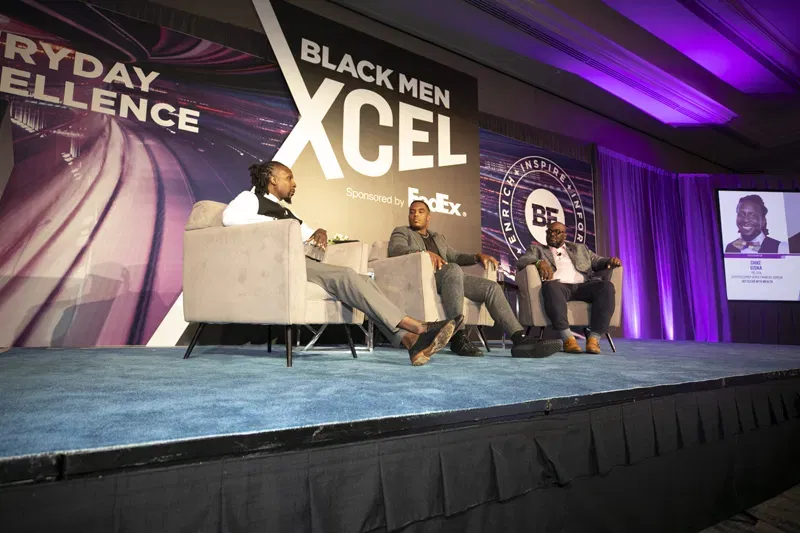
When wellness experts and counselor Nicholas Dillon, CEO of Believe Wellness Center, sat down with BLACK ENTERPRISE Senior Digital Editor Sidnee Douyon during the 2023 XCEL Summit for Men Spotlight series, he said one of the secrets to his success as an entrepreneur, coach, and mental wellness counselor was making sure his business was diversified with multiple streams of income. It was advice Dillon received early in his career, and he stressed that to the men attending the 2023 XCEL Summit for Men (then known as the Black Men XCEL Summit). It’s sound advice he mentioned three years ago, and it’s still true today. As we approach the 10th anniversary of the XCEL Summit for Men, BE echoes Dillon’s words of wisdom to anyone on the verge of starting a business. Take a moment to hear an excerpt from Dillon’s Spotlight interview in this accompanying short video clip. 

RELATED CONTENT: 10 Years Of Black Enterprise’s XCEL Summit Honorees

Deion Sanders, Colorado State, CU
FT. WORTH, TX - SEPTEMBER 02: Colorado Buffaloes coach Deion Sanders before playing the TCU Horned Frogs at Amon G. Carter Stadium in Ft. Worth September 02, 2023. (Photo by Andy Cross/MediaNews Group/The Denver Post via Getty Images)

Colorado Overpaid Deion Sanders And Lost $1.2M On 2024 Alamo Bowl

This fiscal oversight comes at a critical time for the university’s operations.


University of Colorado administrators made a significant payment error involving head coach Deion Sanders after misinterpreting postseason compensation guidelines.

A June 4, 2026, audit shows Colorado overpaid Sanders by $50,000 after the 2024 season because officials misclassified the Alamo Bowl as a “New Year’s Six” game.

Sanders was contractually entitled to $150,000 for a regular bowl and $200,000 for a New Year’s Six appearance. Colorado paid the higher bonus, although the Alamo Bowl does not qualify as a “New Year’s Six” game.

This overpayment reflects broader fiscal mismanagement within the Buffaloes’ athletic department. According to an audit obtained by USA TODAY Sports, Colorado lost $1.23 million on the 2024 Alamo Bowl mainly because the department lacked an event budget to manage spending.

According to a report by the Colorado Office of the State Auditor, the audit recommends that the University of Colorado establish clear approval processes for postseason compensation, require that budgets be prepared in advance of major events, and implement real-time expense tracking for these activities. The report also advises regular financial oversight and the use of automated payment controls to ensure contract compliance and prevent future administrative errors.

A report from the Colorado General Assembly found that total revenue from the game and related events amounted to $2.97 million, while expenses totaled $4.21 million, and the transportation of 210 band and spirit members cost $945,053. According to the most recent NCAA Agreed-Upon Procedures report for the University of Colorado–Boulder, no specific details are provided regarding travel expenses or unauthorized discretionary adjustments involving assistant coaches and support staff.

The report did not identify intentional misconduct but emphasized the need to standardize postseason compensation policies and strengthen oversight. The audit warns that, without corrective action, payment errors and deficits will likely continue.

This pattern of excess compensation continues. For the second consecutive year, Colorado paid Sanders beyond his contractual requirements. After his 2023 debut season, the university awarded Sanders a discretionary $250,000 bonus, citing the significant national media attention and marketing value generated by his “Coach Prime” persona.

This fiscal oversight comes at a critical time for the university’s operations. Colorado’s athletic department faces a projected $27 million deficit for the fiscal year ending June 30, 2026.

These budget challenges reflect broader trends in major college athletics. Like many programs, Colorado faces financial pressures from rising executive and coach salaries and a new industry-wide requirement to pay $20.5 million annually to student-athletes under revenue-sharing models. Peer institutions such as Arizona State and UCLA have also reported multimillion-dollar athletic deficits and similar difficulties controlling spending, showing that Colorado’s situation is part of a larger issue across college athletics.

Despite these financial challenges, Sanders signed a contract extension after the 2024 season that nearly doubled his compensation to over $10 million annually. However, the team’s on-field results have been mixed. The Buffaloes finished 9-4 in 2024 but dropped to a 3-9 record in 2025 after the departures of quarterback Shedeur Sanders and Heisman Trophy winner Travis Hunter.

In response, Colorado’s athletic management committed to removing ambiguous language from future postseason contracts and routing all event budgets through the CU Boulder Business, Finance, and Infrastructure Office for oversight, as recommended by the audit. The university stated that this office will conduct quarterly reviews of all postseason budgets and compensation agreements, with compliance officers responsible for monitoring adherence to contract protocols.

According to the University of Colorado Boulder Office of Internal Audit Management Report, the audit findings will be shared with senior athletics administration to promote sustained corrective actions and accountability.

RELATED CONTENT: Rookie Revolution: How Shedeur Sanders and Travis Hunter Shattered Tom Brady’s Licensing Record To Set New $30M Blueprint

×