Woodlawn Central, Obama Presidential Center
Photo by Jane Tyska/Digital First Media/East Bay Times via Getty Images

Development Without Displacement Is a Capital Strategy, Not a Slogan 

Every neighborhood that lands a new landmark hears the same promise ...


By J. Byron Brazier

Every neighborhood that lands a new landmark hears the same promise, and too many of them get the same ending. Investment arrives, values climb, and the families who held the block together through the lean decades are priced out before the ribbon is cut.

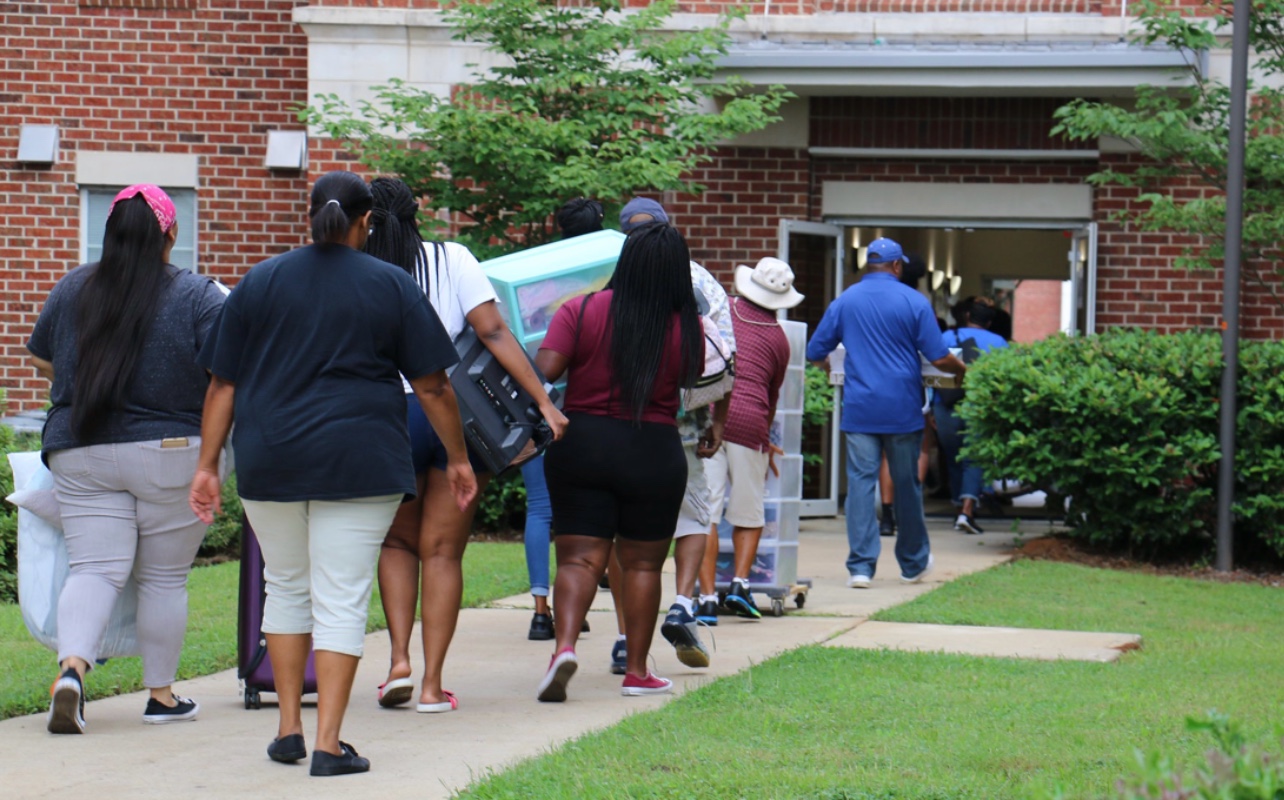
Woodlawn is watching that story unfold in real time. The Obama Presidential Center opened this summer a few blocks from my family’s church. In East Woodlawn, the median home price doubled between 2019 and 2025 to $440,000, according to DePaul University’s Institute for Housing Studies. One-bedroom apartments that rented for $1,200 now go for about $1,800 a month.

Last month, we broke ground on Woodlawn Central, a $580 million, eight-acre district on land owned by the Apostolic Church of God. The plan calls for roughly 870 homes, a 160-room hotel, retail, a theater, and 700 permanent jobs. People keep asking me how a church ended up as a developer. I think the better question is why more Black institutions have not.

My grandfather, Bishop Arthur M. Brazier, led Apostolic for 48 years. In the 1960s, as president of The Woodlawn Organization, he worked alongside Saul Alinsky to limit the University of Chicago’s expansion into our neighborhood. He understood something it took me years in the field to put into words: whoever controls the land controls the future of the people standing on it.

We usually talk about Black Wall Street as a memory, a symbol of what was taken. I read Greenwood as an operating manual. Tulsa’s Black district flourished as a self-contained hub where residents owned the buildings, the businesses, and the banks, so money earned in the neighborhood had reasons to stay there. The lesson for Woodlawn is structural, because ownership is what keeps value local.

In practice, development without displacement comes down to three financing decisions, and most projects get at least one of them wrong.

First, keep the land

Much of Woodlawn Central sits on what used to be the church’s parking lots, and the church is developing that ground rather than selling it. An institution that sells to the highest bidder collects one check and gives up any say in what gets built. Holding the land means the value the Obama Center is creating stays with an institution that answers to Woodlawn.

Second, set affordability above the minimum, and set it on day one

Chicago requires 20% of units to be affordable. Woodlawn Central targets 30%, with one- to three-bedroom and multigenerational homes so grandparents, parents, and children can stay on the same block. Affordability added late is the first thing that gets cut when budgets tighten. When it is built into the capital stack from the start, it holds.

Third, underwrite jobs, not only apartments

Housing alone cannot keep a family in a rising neighborhood if its income stays flat. That is why our plan pairs homes with a hotel, retail, office space, maker spaces, and business incubators, and why we count 700 permanent jobs as a core return, not a side benefit. A family that earns its living in Woodlawn has a real chance of affording a life in Woodlawn.

None of this is easy, and I will not pretend otherwise. Residents have raised fair concerns about displacement, and the city’s own tools have struggled to keep up. The $2 million set aside under the 2020 Woodlawn Housing Preservation Ordinance went unspent. I take that as a warning rather than an excuse. Policy can slow displacement, but ownership is what stops it.

I call myself a cultural architect because I believe a neighborhood’s culture is its most valuable asset and the one most easily lost. Our first phase, a $134 million pair of 14-story towers designed by Gensler, is scheduled to open in the second quarter of 2028. When it does, I want the people who kept the lights on in Woodlawn through the hardest years to walk in as residents, workers, and owners.

Black churches own land in cities across this country, and much of it sits in neighborhoods that are about to get expensive. Every one of those congregations will face the question my grandfather answered 60 years ago: will you sell the ground, or build on it?

About the Author

J. Byron Brazier is the lead developer of Woodlawn Central and a cultural architect based in Chicago.

Converse, Nike, ad campaign, KKK
(Photo Credit: Wikimedia)

Converse’s Latest Controversy Shows Why Cultural Competency Is A Business Imperative

The sneaker giant’s apology offers a lesson for every company investing in branding, marketing, and consumer trust.


By Caleb L. Green, Esq.

Reflect for a moment on the Converse ad and the image that circulated.

At first glance, it appears to be nothing more than a sneaker advertisement. Yet for many consumers, the imagery evokes something far more troubling.

Converse found itself at the center of a growing controversy after consumers criticized an advertisement from its Chuck 70 X campaign, pictured above, arguing that the image evoked symbolism associated with the Ku Klux Klan and the lynching of Black Americans. The company ultimately removed the advertisement and issued a public apology, acknowledging that it understood why many people found the image upsetting. 

As a trademark and branding attorney, my immediate reaction was not whether the advertisement violated any law. It almost certainly did not. My question was much simpler:

“How did this make it through review?”

That question matters because the Converse controversy is not really about sneakers. It is about something much bigger: the growing gap between legal approval and cultural awareness.

Intent Does Not Eliminate Impact

To be clear, there is currently no evidence that Converse intentionally incorporated racist imagery into its campaign. In all likelihood, this was an unfortunate combination of lighting, shadows, wardrobe choices, and composition. 

But intent is only part of the equation. Consumers do not experience branding through internal company discussions, creative briefs, or marketing meetings. Consumers experience branding through what they see.

And what many consumers saw was a pointed white shape resembling a Klan hood, accompanied by hanging shoes that some interpreted as evoking lynching imagery. Whether that interpretation was intended is ultimately less important than the fact that thousands of people arrived at the same conclusion almost immediately. 

That should concern every brand and marketing leader.

Every Brand Needs Cultural Due Diligence

Businesses routinely conduct legal due diligence. They clear trademarks, review advertising claims, assess regulatory compliance, and evaluate intellectual property risks. But very few organizations perform what I call cultural due diligence.

Cultural due diligence asks a different set of questions:

• How might this imagery be interpreted outside the conference room?

• Does this symbol carry historical meaning for particular communities?

• Are there cultural references we are overlooking?

• How could this campaign be perceived by the consumers we hope to reach?

Those questions are not about politics. Nor are they about being “woke.” They are about competent risk management, consumer perception, and brand stewardship. Companies spend millions of dollars building brands and cultivating goodwill. All of that investment can be undermined when an organization fails to recognize how a message, image, or symbol may be received by the public.

This Isn’t the First Time

The Converse controversy joins a growing list of branding decisions that generated backlash not because they were legally problematic, but because they revealed a lack of cultural awareness.

We saw similar reactions when Walmart introduced Juneteenth-themed products. We saw it when Michael B. Jordan’s rum brand adopted the name “J’Ouvert,” a culturally significant Caribbean tradition. We have also seen public controversy arise from attempts to commercialize social justice movements, like #MeToo.

In each instance, the legal analysis was only part of the story. The larger question was whether the organization had taken the time to understand how the communities connected to those symbols, traditions, and histories might react.

Diversity is a Competitive Advantage

One of the most effective ways to avoid these situations is surprisingly straightforward: include diverse perspectives in the decision-making process and ensure those voices are genuinely empowered to be heard.

A marketing team composed of individuals with different experiences, backgrounds, and perspectives is far more likely to identify potential concerns before a campaign ever reaches the public. The question is not whether every concern ultimately proves valid. The question is whether someone felt empowered to raise the concern in the first place.

Had someone looked at the Converse advertisement and asked, “Does anyone else think this resembles a Klan hood?” the company may have avoided a national controversy altogether.

What makes the Converse controversy particularly instructive is that it illustrates a type of risk that cannot be identified through a trademark search, copyright review, or legal compliance check. The campaign may have passed every traditional legal review. Yet it still generated the very outcome brands work so hard to avoid: negative publicity, consumer distrust, and damage to goodwill.

For companies investing significant resources into building brand equity, that should be a sobering reminder that legal review and cultural review serve different, but equally important, functions. For decades, trademark lawyers have helped businesses protect valuable brand assets. Traditionally, that meant securing registrations, enforcing intellectual property rights, and preventing consumer confusion.

Today, however, some of the greatest threats to brand value have nothing to do with infringement. They come from reputational harm.

Brand equity is built on trust.

Trust is built on understanding.

And understanding requires cultural awareness.

Consumers increasingly expect companies to recognize the historical and cultural significance of the messages they place into the marketplace. Businesses that fail to meet those expectations face consequences that can be every bit as damaging as a lawsuit or trademark dispute.

The Real Lesson for Corporate America

The most important takeaway from the Converse controversy is not whether the advertisement was intentionally offensive. The more important question is whether companies are equipped to identify cultural risks before consumers do.

Too often, the answer appears to be no.

For business leaders, marketers, entrepreneurs, and the professionals who advise them, the lesson is straightforward: legal review alone is no longer enough. Brands must evaluate campaigns through cultural, historical, and social lenses before they launch. Organizations that embrace cultural competency as part of their brand strategy will be better positioned to build trust, avoid preventable controversies, and create deeper connections with the communities they serve.

The reality is that consumers do not evaluate brands exclusively through legal frameworks. They evaluate them through lived experiences, cultural memory, and historical context. A campaign can be legally compliant and still fail in the marketplace if it ignores those realities.

That is why cultural competency should not be viewed as a public relations exercise or a diversity initiative. It is a core component of modern brand stewardship.

In today’s marketplace, cultural competency is not simply a matter of corporate citizenship. It is a matter of brand protection. And increasingly, it may be one of the most valuable forms of risk management a company can invest in.

Bio: Caleb L. Green is a Partner at Howard & Howard PLLC, an adjunct professor at the William S. Boyd School of Law, and the 2026-2027 Chair of the Young Lawyers Division of the National Bar Association. His practice focuses on trademarks, branding, intellectual property litigation, and brand protection. 

HBCUs, funding, Education Dept.
(Photo: FVSU/Flickr)

Trump Administration Directs Additional $174M To HBCUs

The new $174 million allocation comes through mandatory education funding, according to UNCF.


The Trump administration is directing more than $174 million in additional federal funding to historically Black colleges and universities (HBCUs), providing a second consecutive year of one-time funding above congressionally approved levels, Yahoo News reports.

U.S. Education Secretary Linda McMahon announced the investment Sept. 22 during the White House Initiative on Historically Black Colleges and Universities Summit in Washington. The money comes in addition to $406 million Congress approved and signed into law for HBCUs for fiscal 2026, according to the United Negro College Fund.

The latest investment brings the additional funding directed to HBCUs above congressionally approved levels to more than $612 million across fiscal years 2025 and 2026, according to the Education Department. The administration provided approximately $438 million in additional one-time funding in fiscal 2025.

The new $174 million allocation comes through mandatory education funding, according to UNCF.

Michael L. Lomax, president and CEO of UNCF, praised the additional investment while emphasizing the continued financial needs facing HBCUs.

“The needs on HBCU campuses are too severe; but this investment will surely yield a great return,” Lomax said.

“Our grateful community is appreciative, and we look forward to investing the funds well into our campuses, programs, and most importantly, our students.”

The funding arrives as HBCUs continue to seek greater federal investment in infrastructure, technology, and other institutional needs. UNCF has urged Congress and the White House to pass the bipartisan IGNITE HBCU Excellence Act, which would establish a federal grant program to support campus modernization, deferred maintenance, broadband expansion, campus safety upgrades, and workforce innovation hubs.

The Education Department said the latest investment is intended to support HBCUs as they educate students and prepare graduates for careers across industries, including science, technology, engineering and mathematics, education, public service and business.

The administration also announced more than $61 million in additional one-time funding for Tribally Controlled Colleges and Universities.

UNCF has pointed to HBCUs’ broader economic impact in advocating for increased investment in the institutions. The organization estimates HBCUs collectively generate about $16 billion in economic activity annually and says one graduating class of HBCU students is projected to earn $146 billion over their lifetimes.

RELATED CONTENT: Stephen A. Smith Is Putting Money Behind His HBCU Mission With A New Sports Scholarship

reparations, Jamaica, United Kingdom, King Charles, Privy Council
(Getty Images)

Jamaica’s Slavery Reparations Petition Moves To Privy Council

The referral does not constitute a ruling that Britain owes Jamaica reparations.


King Charles III has referred Jamaica’s slavery reparations petition to the Judicial Committee of the Privy Council, moving the Caribbean nation’s effort to seek legal guidance over Britain’s role in slavery into a new stage, The Guardian reports.

Jamaica’s Minister of Culture, Gender, Entertainment and Sport, Olivia Grange, announced the development in Parliament Sept. 22. The petition was formally submitted to the king Sept. 7 on behalf of the Jamaican people.

The petition asks the Privy Council to consider three central legal questions: whether the forced transportation and enslavement of Africans in Jamaica under British rule were lawful; whether those actions violated international legal principles applicable at the time; and whether the United Kingdom has a legal obligation to provide remedies for slavery and its continuing consequences.

Jamaica filed the petition under Section 4 of the Judicial Committee Act 1833, a provision that allows the British monarch to refer certain legal questions to the Privy Council for consideration.

Prime Minister Andrew Holness has said Jamaica views the petition as a legal pathway toward reparatory justice rather than an adversarial action against the United Kingdom. The government is initially seeking answers to fundamental legal questions rather than specifying an amount of financial compensation.

The referral does not constitute a ruling that Britain owes Jamaica reparations. According to the outlet, a Privy Council opinion would not compel the British government to provide compensation. Jamaican officials, however, have said the legal process could help establish a foundation for future discussions surrounding reparatory justice.

The development comes as Caribbean governments continue efforts to seek reparations for slavery and colonialism. Jamaica has worked through the Caribbean Community, or CARICOM, which has established a 10-point plan for reparatory justice addressing issues including public health, education, cultural institutions, debt cancellation, and economic development.

The broader reparations movement has increasingly focused on the lasting economic effects of slavery and colonialism across the Caribbean, including disparities in wealth, development, and access to resources.

Jamaica abolished slavery in 1838 following a period of apprenticeship after Britain passed the Slavery Abolition Act in 1833. Former slaveholders received compensation from the British government following abolition, while formerly enslaved people received no compensation.

Grange said Jamaica is awaiting instructions from the Judicial Committee on how the matter will proceed as the country’s attorney general prepares to handle the case.

RELATED CONTENT: Nearly 4M Records Of Enslaved People, Now Searchable

Lori Harvey , PLT, Pretty Little Thing Gran Coramino
Photo by Dimitrios Kambouris/Getty Images

Lori Harvey Is Turning Influence Into A Business Playbook For Black Women

The entrepreneur is using her new Gran Coramino role to create opportunities for women while expanding her own business portfolio.


Lori Harvey is using her seat at the table to help bring more women into the room.

The model and beauty founder is putting that philosophy into action as chief creative advisor for Gran Coramino Tequila, the premium spirits brand co-founded by Kevin Hart and tequila maker Juan Domingo Beckmann.

“Supporting women, especially women business owners, is something I really value,” Harvey told Complex. “And I love being able to bring that into this role.”

Since announcing her advisory role at Gran Coramino in June, Harvey has been leading the creative vision for Coramino Woman, a platform focused on connecting the tequila brand with female consumers through campaigns, cultural activations, and brand storytelling. The company said the appointment came as Gran Coramino surpassed $200 million in retail sales.

Outside of working with the spirits brand, Harvey is the founder of SKN by LH, a skin care company built around a five-step system, and YEVRAH Swim. She has also partnered with brands such as Good American and PrettyLittleThing.

Her latest move, however, highlights another part of Harvey’s business strategy: collaboration. Last week, the 29-year-old entrepreneur hosted a private gathering in Los Angeles spotlighting women business owners. She tapped longtime collaborator Akansha Mirchandani and FLUFF Studios to execute the event. Rather than simply attaching her name to the experience, Harvey was involved in shaping the creative direction.

“AK understands my vision and knows how to turn it into something that feels elevated, thoughtful, and authentic to me,” Harvey said.

The event followed her appearance at the Create & Cultivate festival, where she discussed entrepreneurship and the importance of supporting women in business. That approach mirrors a broader evolution among celebrity entrepreneurs, where influence can become an asset for building brands, securing strategic partnerships, and creating new business opportunities. Overall, Harvey’s growing business portfolio shows how a personal brand can become a business platform when paired with ownership, creative control, and relationship-building.

RELATED CONTENT: ‘Effortlessly Iconic’ Lori Harvey Launches Campaigns With Gymshark and Cadillac

Medical equity, preventive healthcare,
Image Attribution: Pexels.com royalty-free image #5234504, uploaded by user Polina Tankilevitch, retrieved from https://www.pexels.com/photo/a-doctor-holding-a-stethoscope-5234504/ on January 22nd, 2022. License details available at https://www.pexels.com/photo-license/ - image is licensed under the Pexels License

How ‘Black Health Matters’ Is Navigating A New Era Of Health Equity Funding

Black Health Matters is adapting its strategy as funding for health equity programs changes.


Roslyn Young-Daniels knows how to sell an idea.

Before launching Black Health Matters in 2012, she built a career in publishing and advertising sales, working with outlets like Essence, Sports Illustrated, and Fitness Magazine. Now, she’s applying that business experience to a different kind of mission: helping Black communities access preventive healthcare. But the language around that mission is changing.

Black Health Matters, a nonprofit that addressed health disparities, has stopped using the phrase “health equity” in sponsorship proposals to pharmaceutical companies. Instead, the organization uses “population health” — a shift Young-Daniels says reflects the current corporate funding environment.

“I can’t say ‘health equity’ in my proposals,” Young-Daniels told MediaPost. “I say ‘population health.’ But people understand that we’re here to save lives.”

The change comes as pharmaceutical support for diversity, equity, and inclusion-related initiatives has declined following policy changes under the Trump administration. Still, she says pharmaceutical companies remain engaged with organizations working directly with patients.

“They may not call it DEI, but they still have advocacy groups and departments,” she said. “They want to work with partners that can help patients, and that’s what we do.”

That partnership model remains central to Black Health Matters’ business operations. A recent summit at New York City’s Riverside Church drew more than 2,000 attendees and received support from Pfizer, Merck, AstraZeneca, Novo, and other pharmaceutical companies. Meanwhile, hospitals and community organizations continue to play a major role. At the event, Memorial Sloan Kettering Cancer Center provided free colorectal cancer screening kits, Mount Sinai offered prostate cancer testing, and Weill Cornell Medicine brought its rare disease group. Other organizations provided mammograms and referrals for blood testing.

Over 14 years, Black Health Matters has produced roughly 600 events focused primarily on preventive care. The organization currently stages three major summits annually but plans to increase that number to seven next year.

Its core audience is also telling. Young-Daniels says attendees are primarily people 40 and older, with women representing roughly 80% of participants because they “tend to be the CEOs of health for their families.”

Young-Daniels launched Black Health Matters after deciding to “become an advocate for the medically underserved.” Today, her approach reflects a familiar entrepreneurial lesson: When the market changes, the mission may stay the same while the strategy evolves.

RELATED CONTENT: Mississippi Doctors Ditch Insurance For A Direct Primary Care Model

Tasha Wright, The Air We Share, Sanofi
Tasha Wright, the director of U.S. Volunteer Programs & Community Relations at Sanofi (Photo Credit: Courtesy of Tasha Wright)

Tasha Wright Is Helping Families Tackle Air Quality Concerns Through ‘The Air We Share’

The Sanofi leader is helping families connect environmental health to respiratory wellness while creating new pathways for young people in STEM.


Even though air quality can be invisible, its impact can be major. Environmental conditions like wildfire smoke, air pollution, and extreme heat can affect respiratory health while leaving families without the information they need to protect themselves.

That knowledge gap is where Tasha Wright saw an opportunity. As director of U.S. Volunteer Programs & Community Relations at Sanofi, Wright spearheaded the launch of The Air We Share earlier this year, a national education program designed to help educate communities about practical ways they can protect their health. Created in partnership with the Association of Science and Technology Centers (ASTC), there are currently 14 science centers across the first cohort that are designing and delivering programming, giving families and students access to hands-on exhibits, science-based information, and resources focused on the connection between environmental conditions and respiratory wellness.

Wright said the idea for “The Air We Share” developed a few years ago after she spoke with colleagues about STEM and corporate social responsibility.

“What started as a conversation became a vision,” she wrote on LinkedIn. “That vision became a program.”

The initiative comes as families report widespread concern about air quality. An ASTC-Sanofi survey found that 87% of U.S. parents are concerned about air quality’s impact on their families, while only 37% say they regularly check air-quality reports. Eighty-four percent say they want to do more to address poor air quality. According to research by ASTC and Sanofi, nearly nine in 10 parents worry about how air quality affects their family’s health, while far fewer feel prepared to take meaningful action. The Air We Share focuses on empowering families with the information they need to take action.

“The Air We Share is our signature STEM initiative, and it’s designed around the impact that the environment has on respiratory health,” Wright told BLACK ENTERPRISE in an exclusive interview. “It’s very timely because we’re talking to people about how the environment impacts respiratory health while we’re also seeing it in real time.”

The initiative officially launched at Boston’s Museum of Science, where students, educators, and community leaders gathered to discuss the relationship between environmental conditions and health. The event featured science educator and TV personality Bill Nye the Science Guy, online science creator and educator Sean the Science Kid, and Boys & Girls Club member Andrew Rodgers, who moderated a discussion on air quality and public health.

Wright added that she sees an opportunity to put young people in the driver’s seat. “It’s an initiative focused on education and awareness, but the other piece is looking to our youth for solutions,” she said.

That approach will expand through a national student competition planned for 2027, challenging young people and communities to develop ideas addressing air-quality challenges.

For Wright, the work also reflects a broader push to make STEM education more accessible to communities that have historically had fewer opportunities and resources.

“It’s a two-pronged approach,” she said. “We’re going into communities and partnering with museums across the country to educate families and students on how air quality impacts their health. But then we’re turning to them and saying, ‘Now that you have this information and you’ve asked all these amazing questions, how do we solve for it?’”

The initiative is part of Sanofi’s broader STEMulate Growth commitment, which aims to expand access to STEM learning and careers for students in historically under-supported communities.

As Wright put it: “It’s become a lot more than what I originally envisioned, but we know how impactful and important it is.”

DoorDash, doordash, tips, delivery, driver, settlement, NYC
(Photo: Tayfun Coskun/Anadolu Agency via Getty Images)

DoorDash To Pay $131.5M After NYC Delivery Workers Were Unpaid

More than $115 million will go directly to affected workers, while DoorDash will pay more than $16 million in civil penalties and costs.


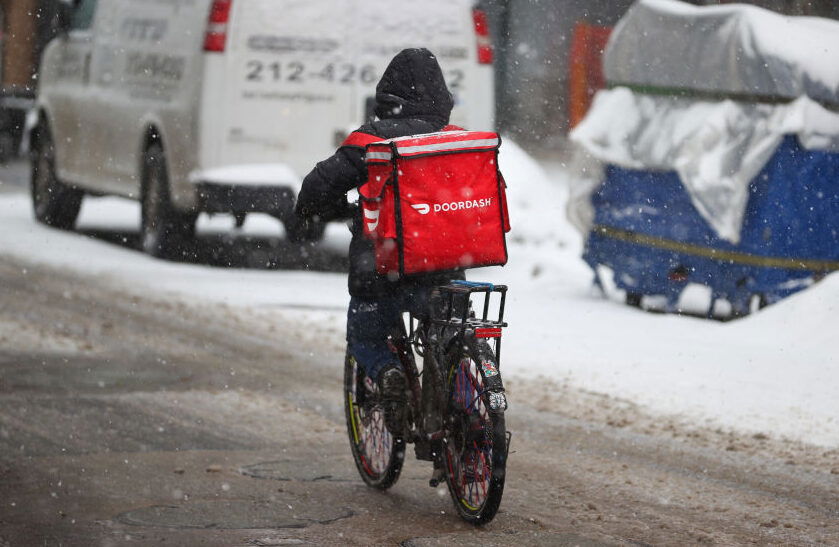
DoorDash has agreed to pay $131.5 million after a New York City investigation found that more than 260,000 delivery workers were underpaid, unpaid, or paid late, AP News reports.

Mayor Zohran Mamdani and the Department of Consumer and Worker Protection announced the settlement on Sept. 22. City officials said it is the largest worker settlement in New York City history and the largest settlement involving food delivery workers secured by a U.S. municipality.

More than $115 million will go directly to affected workers, while DoorDash will pay more than $16 million in civil penalties and costs. Workers do not need to file claims or submit evidence because the city has identified eligible recipients through its analysis of DoorDash records.

The investigation examined 152 million payments and 110 million hours of work. City officials said DoorDash failed to properly account for certain categories of work when calculating compensation, including some canceled trips, deliveries that crossed city limits, and time workers spent logged into the platform between deliveries.

New York City requires apps that provide restaurant or grocery delivery services to pay workers at least $22.13 per hour, excluding tips, for qualifying time spent preparing for and making deliveries.

“When a worker earns a wage, they deserve to be paid that wage — not tomorrow, not after a lawsuit, but on time and in full,” Mamdani said in announcing the settlement.

DoorDash acknowledged making errors involving missing and delayed payments and apologized to affected workers. The company said technical problems and complicated delivery situations contributed to some of the errors.

DoorDash said $12.3 million of the settlement covers workers who were underpaid or paid late, while more than $83 million resolves a disagreement with the city over how to calculate compensation for time workers spend online between deliveries.

Approximately 264,000 workers are expected to receive payments. DoorDash said the median payment will be about $48, while city officials said more than 27,000 workers will receive more than $1,000, and more than 4,000 will receive more than $5,000.

The agreement also subjects DoorDash to three years of additional oversight. The company must provide detailed monthly data to the city to monitor compliance with rules governing minimum pay and other delivery worker protections.

Workers Justice Project and the Workers’ Algorithm Observatory are also developing technology that will allow delivery workers to record information from the DoorDash app and share data with city regulators to help monitor compliance.

The settlement follows another enforcement action involving DoorDash in New York. In 2025, the company agreed to pay nearly $17 million to resolve allegations that it used customer tips to subsidize guaranteed worker pay rather than allowing workers to receive those tips on top of their guaranteed compensation.

RELATED CONTENT: Oklahoma Therapist Wins Trademark Battle Against DoorDash

Minneapolis, George Floyd, George Floyd Square
(Photo: Angela Weiss/AFP via Getty Images)

George Floyd’s Family Questions $19 Million GoFundMe Raised In His Name

Six years after George Floyd’s death, three siblings are asking for financial records tied to the fundraiser created in his name.


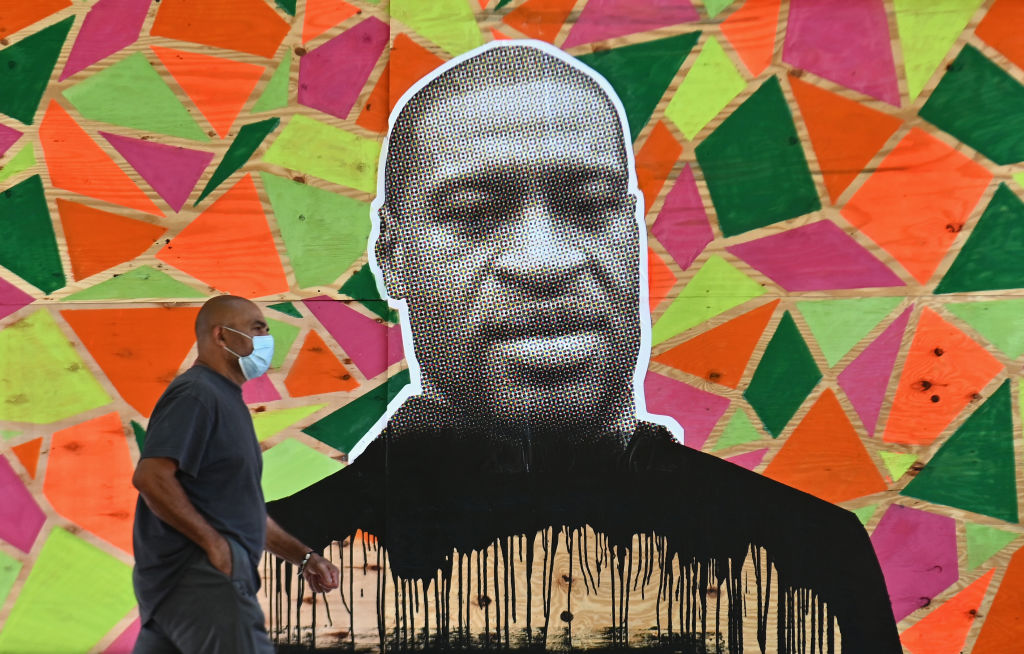
More than six years after George Floyd’s death, three of his siblings are seeking a detailed account of the millions of dollars raised through a GoFundMe campaign created in his name.

According to documents obtained by TMZ, a lawyer representing his sisters, Zsazsa and LaTonya Floyd, and brother, Rodney Floyd, sent a letter to their brother, Philonise Floyd, on Aug. 11 requesting financial records related to the George Floyd Memorial GoFundMe. The attorney gave Philonise Floyd 20 days to provide the requested information, which included campaign statements, transaction histories, tax filings, and other documents showing how the money was managed and distributed. The letter reportedly cites approximately $19 million raised by the campaign. GoFundMe’s 2020 year-end report, however, listed the fundraiser at $14.7 million from more than 500,000 donations, according to Complex.

The campaign quickly became one of the largest fundraisers on the platform after Floyd was killed by Minneapolis police in May 2020. At the time, Philonise Floyd said the donations would help cover funeral and burial expenses, counseling, travel related to court proceedings, and other family needs. He also said a portion of the funds would go to Floyd’s estate to support his children and their education.

Now, the family members say they are entitled to a portion of the funds. Rodney Floyd framed the current request around access to information rather than allegations of wrongdoing. They also told TMZ that they contacted civil rights attorney Ben Crump, who currently represents Nolan Wells‘ family, seeking answers, but have received no response.

“We want to see the records, understand how decisions were made, and make sure the family’s questions are answered,” he told TMZ. “We’re speaking up because transparency matters.”

RELATED CONTENT: Reconstruction Of George Floyd Square Sparks Backlash From Black Business Owners And Residents

×