THE OSCARS® - The 91st Oscars® broadcasts live on Sunday, Feb. 24, 2019, at the Dolby Theatre® at Hollywood & Highland Center® in Hollywood and will be televised live on The Walt Disney Television via Getty Images Television Network at 8:00 p.m. EST/5:00 p.m. PST. (Eric McCandless via Getty Images) Taylor Simone Ledward, CHADWICK BOSEMAN
Chadwick Boseman’s Widow Reveals $1.7M In Family Payouts Amid Estate Dispute
New court filings reveal more than $1.7 million in payments to Chadwick Boseman’s parents as his widow faces scrutiny over his estate
The financial details surrounding Chadwick Boseman’s estate are back in the spotlight amid a renewed disagreement among family members over how his assets are being handled.
Taylor Simone Ledward Boseman, Boseman’s widow and the administrator of his estate, is pushing back against a petition filed by his brothers, Derrick and Kevin Boseman, who are seeking to have her removed from that role. In new court filings obtained by TMZ, she revealed that more than $1.7 million in payments were made to the late actor’s parents. According to the documents, Ledward Boseman says she has paid Chadwick’s parents, Carolyn and Leroy Boseman, more than $1.7 million since 2022. The payments reportedly include $1.5 million in May 2023, $260,000 later that year, and slightly more than $4,000 in December 2024. She also says she provided $300,000 of her own money to Derrick Boseman’s children.
A Court Order Established How Boseman’s Estate Would Be Divided
At the heart of the dispute is more than $3.8 million in estate assets that Derrick and Kevin Boseman allege have not been distributed. A 2022 court order divided the estate 50%-25%-25% among Ledward Boseman and Chadwick’s parents. Ledward Boseman disputes the brothers’ characterization of her management of the estate. Meanwhile, her attorney, Adam Streisand, described their petition as a “public-relations stunt to smear her in the tabloid press,” reports Yahoo. Ledward Boseman has also pointed to efforts to preserve and expand Chadwick’s creative legacy, including launching the Chadwick Boseman Foundation for the Arts and the licensing of his play Deep Azure at Shakespeare’s Globe in London.
The Black Panther star died in August 2020 at the age of 43 from complications of colon cancer after keeping his diagnosis private for four years. He died without a will, leaving his estate subject to court oversight. A separate filing in July resulted in a Los Angeles judge appointing attorney Jason Rubin to assist with oversight of the estate.
The case highlights a crucial estate-planning lesson for entertainers, entrepreneurs, and other high-net-worth individuals: wealth can become significantly more complicated to manage when succession plans are unclear.
Bronx Teen Launches Nonprofit To Educate Children In Ghana
The idea began after Owobu started spending summers in Ghana at age 15.
At 18, Bronx high school senior Max Owobu is using entrepreneurship and philanthropy to expand access to education for children in Ghana, Good News Network reports.
The idea began after Owobu started spending summers in Ghana at age 15. His Nigerian father was raised in the West African country, and those visits gave Owobu a firsthand look at the financial barriers facing some families.
Owobu told Good News Network that he saw children his age working in shops or selling items on the street to help their families instead of attending school.
“I was seeing kids my age working, just selling things on the street or in shops, working along with the family to try and get by rather than going to school to get an education so they could better their lives for the future,” Owobu said.
Rather than simply observe the problem, Owobu decided to use his own money to help. He initially used savings from his weekly allowance to pay for a Ghanaian child named Matthew to attend school. The experience eventually led him to establish the Yenko Foundation and expand his efforts to additional students.
The organization works with Calvary Methodist Elementary School in Ghana. Owobu said he chose the school after visiting and witnessing students’ enthusiasm for learning.
According to the foundation, $1,000 can cover tuition, uniforms, transportation, meals, and school supplies for one student for an academic year.
Owobu is continuing to grow the organization while completing his senior year of high school and preparing for college. His immediate goal is to sponsor 10 to 15 children through primary school.
His longer-term vision extends beyond education. Owobu hopes to eventually expand the foundation’s work to support hospitals, orphanages, and other communities in need across Ghana.
What began with one teenager’s allowance has developed into an international effort focused on addressing one of the fundamental barriers to education: the cost of getting — and keeping — children in school.
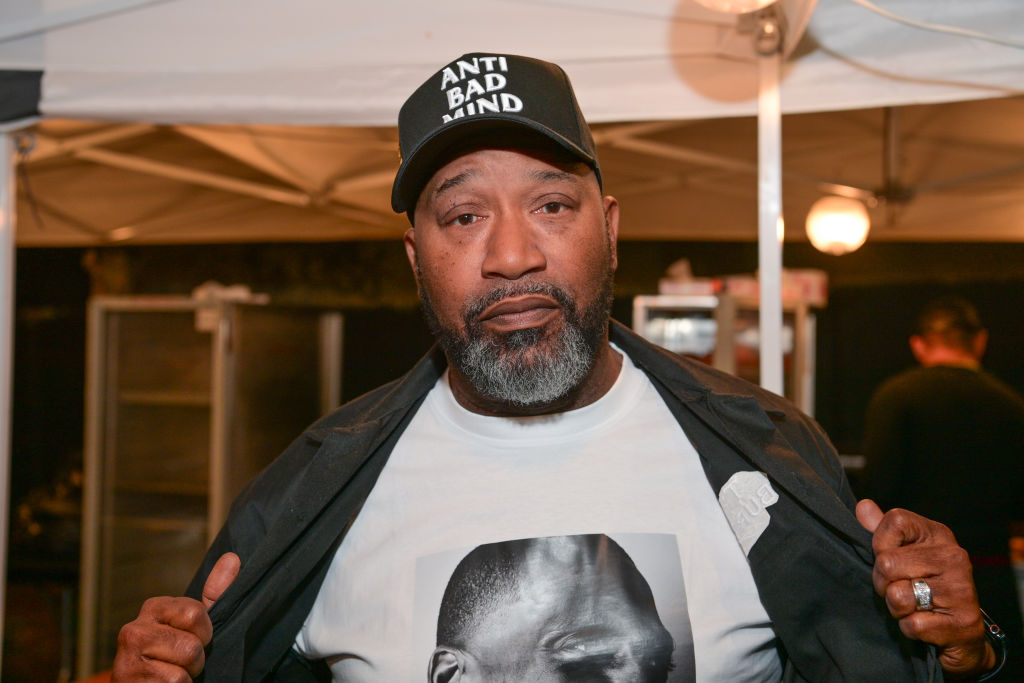
ATLANTA, GEORGIA - APRIL 20: Bun B attends The Sesh Music Festival & Immersive Atlanta Experience on April 20, 2024 in Atlanta, Georgia. (Photo by Prince Williams/WireImage)
Bun B Opens Another ‘Trill Burgers’ Location In H-Town
The legendary rapper and entrepreneur is growing Trill Burgers with a fourth Houston-area location and late-night drive-thru.
Houston rapper and entrepreneur Bun B is taking his burger business to another major Houston corridor.
Trill Burgers opened its fourth Houston-area location on Sept. 25 at 7616 Westheimer Road, just west of the Galleria. The expansion adds another brick-and-mortar location to a restaurant known for its smashburgers, which began as a pop-up in 2021. The new 3,100-square-foot restaurant seats 70 and includes a late-night drive-thru that will remain open until 3 a.m. Friday through Sunday beginning in October.
“Every time we open a new location of Trill Burgers, it’s such an incredible feeling for our entire team,” Bun B said, according to Click2Houston. “We are so grateful to the city of Houston for embracing Trill Burgers the way that it has. Our guests continue to show us love and support, and we promise to always deliver that Trill Burgers quality that customers know to expect. Having a location on another iconic Houston road is truly surreal. We can’t wait to welcome y’all to Westheimer.”
The menu will include Trill’s signature OG Burger, which includes two smashed all-beef patties, caramelized onions, American cheese, pickles, and Trill Sauce on a potato roll. Customers can also order the three-patty Triple OG, the kid-focused Lil G and plant-based versions, along with Trill Fries, lemonade, Arnold Palmers, and shakes.
For Bun B, whose business ventures extend beyond music, Trill Burgers represents a particularly visible move into consumer entrepreneurship. The rapper launched the concept with restaurateur Andy Nguyen and Nick Scurfield, initially taking the burgers to major events including the Houston Livestock Show and Rodeo and Coachella.
The brand’s breakthrough came in 2022, when Trill Burgers won Good Morning America’s “United States of Burgers” competition. The victory came with a $10,000 prize and national attention, helping accelerate the concept’s transition from pop-up to permanent restaurant.
The Montrose location became Trill Burgers’ first permanent restaurant, followed by two locations in Texas. The Westheimer opening now gives the company a larger footprint across the Houston market while adding a new revenue opportunity through extended drive-thru hours.
For a brand built at the intersection of food, music, and Houston culture, the latest location puts Trill Burgers on one of the city’s busiest commercial corridors — and gives Bun B another lane to build his entrepreneurial legacy.
5 Business Lessons From The Black Woman Building A Luxury Glassware Brand
Kimber Warren used her marketing background and knowledge of wine to launch Sela K hand-blown stemware.
Kimber Warren is a brand and marketing strategist who has spent more than 15 years creating campaigns for brands like Meta, Spotify, and Viacom. She’s also a lover of wine who offers educational wine experiences, including private and virtual tastings and wine list curation for events. But her love of glassware goes back even further.
“Growing up in Savannah, I spent time in both of my grandmothers’ homes, where there were china cabinets filled with beautiful glassware. Cleaning the glasses was a chore, but I became fascinated by the details—the shape, the weight, the color, the stems, even the way a drink looked once it was poured,” she shares.
“Glasses in my family were connected to family gatherings—celebratory moments that were handled with care. So glassware always represented more than function to me.”
Years later, Warren started thinking about glassware differently, noticing that most luxury glassware felt traditional or overly precious, while everyday glassware was practical but forgettable.
The idea to change that came to her one night. “I was out with one of my closest friends, having one of those conversations that makes you want to dream bigger about your life, and I remember looking down at the glass in my hand and thinking, ‘this object doesn’t match this moment,’” she says. “That thought stayed with me.”
In December 2025, Warren launched Sela K, a luxury glassware brand based in Atlanta that offers three different sculptural glasses in two colors. A second-generation glass artist hand-blows the pieces in Asheville, North Carolina.
Warren spoke with BLACK ENTERPRISE exclusively and shared five tips that entrepreneurs should know before launching a luxury home goods product:
Turn your inexperience into a strength
I was not a glassmaker. So I became a student of the category. I learned about hand-blown production, glass thickness, color development, balance, proportion, mold-making, and what happens when a beautiful sketch has to become an object someone can actually hold and use. In some ways, being an outsider helped. I wasn’t starting from “this is how glassware has always been made.” I was starting from “how do I want this to make someone feel?” and then working backward to figure out how to make it possible.
Research, research, and research some more
I approached the category the same way I’ve approached brand building throughout my career: by doing the research first. I spent a lot of time understanding the competitive landscape, how established glassware and home brands were positioned, where they were winning, and where I saw whitespace for something more expressive and design-led. I also commissioned competitive analysis early on, which helped me look at the category more objectively and think about where Sela K could stand apart rather than simply adding another glass to the market. Beyond tableware, I studied the luxury market more broadly. I wanted to understand what luxury actually means to different consumers, especially across age groups, because I knew I wasn’t trying to build a traditional luxury brand.
Make your manufacturer a real part of the process
Designing something on paper is one thing. Translating that design into hand-blown glass where heat, gravity, and the human hand are all part of the process is completely different. There were rounds of prototypes in which a stem was too thin or too heavy, a proportion wasn’t quite right, or a color reacted differently under heat than I expected. One of the biggest lessons was realizing that the best manufacturing relationship isn’t simply with someone who can technically make the product. It’s with a partner who understands what you are trying to communicate through the object and is willing to problem-solve with you until the design feels right.
Think beyond the product itself
You are not just launching a product. You are launching an entire standard. Once you position something as luxury, the customer experiences every detail as part of the product—the materials, the photography, the website, the packaging, the shipping experience, how quickly someone gets a response when they have a question. You can design an incredible object and still lose the customer if everything around it feels ordinary. The other lesson is that luxury requires patience. It’s tempting as a founder to rush because you want to get to market, start generating revenue, and prove the idea. But some things cannot be rushed without eventually showing up in the customer experience. I’ve learned that sometimes the most important founder decision is knowing when something is not ready yet.
Take advantage of resources for entrepreneurs
Founder programs were incredibly valuable. Being part of the Goldman Sachs One Million Black Women: Black in Business program pushed me to pressure-test the business side of Sela K — customer segments, margins, operations, revenue streams, and growth strategy. I also participated in several pitch competitions, and that repetition was important. Every time I had to explain Sela K in three or five minutes, I got clearer on what problem we were actually solving, who we were solving it for, and why the brand needed to exist. That combination of research, development, and constantly having to articulate the business helped turn Sela K from an idea I loved into a brand with a much sharper point of view.
Brown Sugar Babe Founder Turns $300 Into $21M Fragrance Business
Maekaeda Gibbons launched Brown Sugar Babe in 2018.
Maekaeda Gibbons turned a $300 investment into Brown Sugar Babe, a self-funded fragrance company that generated $21 million in gross revenue in 2025 without outside investors, Business Insider reports.
Gibbons launched Brown Sugar Babe in 2018 while working as a loan officer at Bank of America. After paying her bills, she used about $300 she had left to experiment with creating her own versions of expensive fragrances. She spent about $54 on bottles and used the remaining money for carrier oils to test formulas.
What began as a hobby in her kitchen developed into a side business after Gibbons’ co-workers started asking to buy her fragrances.
Seven years later, Brown Sugar Babe generated $21 million in gross revenue, according to digital sales dashboards and financial records reported by the outlet. The company has remained self-funded throughout its growth.
Gibbons said operating without outside investment has required the company to remain lean and delay some ideas until it had enough capital to pursue them. She has also relied on customer feedback, including surveys of the brand’s social media community, to help determine what products to develop.
“If it meant I had to max out a credit card to accomplish getting the ingredients, raw materials, and vessels that were needed to do that, that’s what I did,” Gibbons told the outlet.
As Brown Sugar Babe expanded, so did its investments. Gibbons said the company made several purchases totaling about $5.5 million over three months to secure roughly two years’ worth of inventory and ingredients. She considered financing the purchases but ultimately decided to pay for them over time.
The move allowed the company to secure raw materials and reduce concerns about potential supply chain volatility.
Brown Sugar Babe has built its business primarily around fragrance oils rather than alcohol-based perfumes. Its product line also includes body oils, scrubs, butters, and skincare products.
The company’s expansion has extended beyond e-commerce. In 2025, Gibbons opened Brown Sugar Babe’s flagship store in Atlanta, investing about $1.2 million in construction, branding, and the grand opening event.
The physical location was designed to give customers another way to engage with the brand, which has also built its community through live events and pop-ups.
Despite the company’s growth, Gibbons has continued to build Brown Sugar Babe without raising outside capital, maintaining the self-funded approach that began with her initial $300 investment.
From The Desk Of The National Civil Rights Museum On Its 35th Anniversary
This Museum was born of community vision.
Written by the National Civil Rights Museum
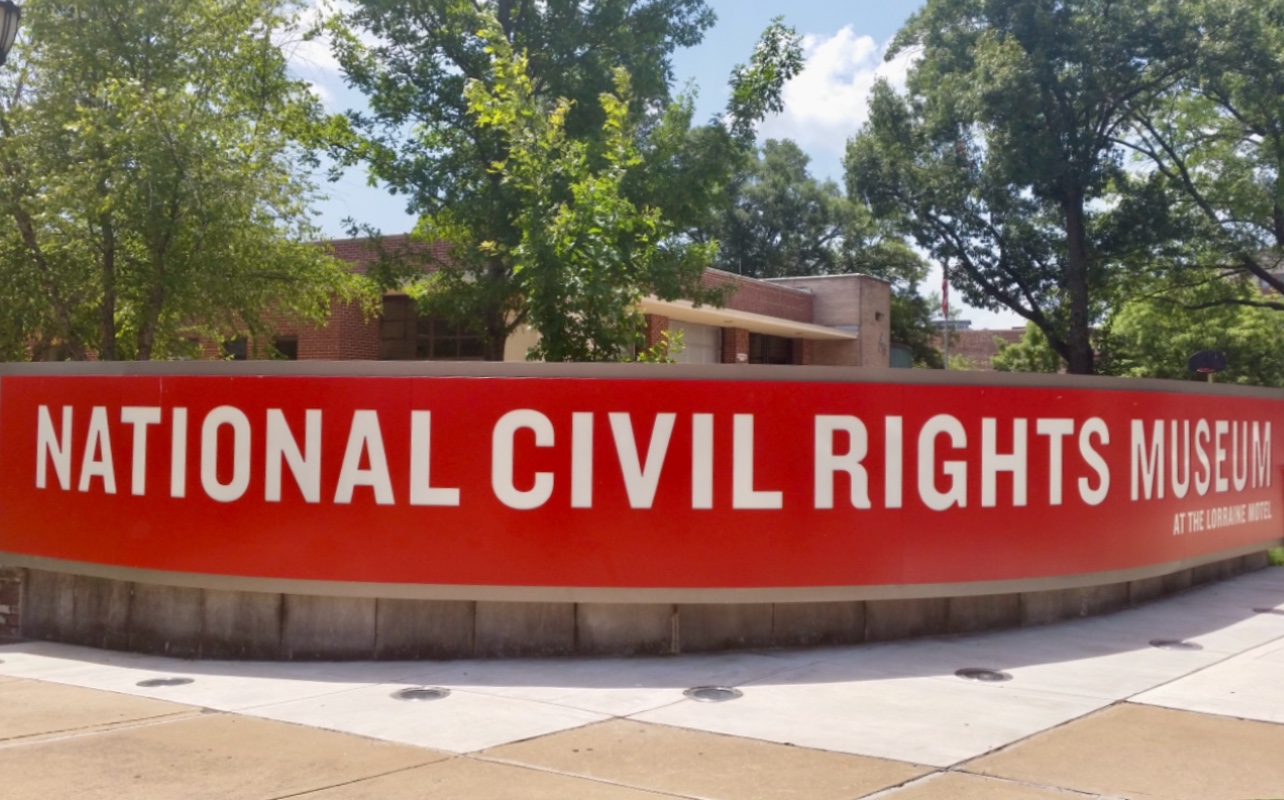
Thirty-five years ago today, on Sept. 28, 1991, the National Civil Rights Museum opened its doors at the Lorraine Motel, where Dr. Martin Luther King Jr. was assassinated on April 4, 1968. Today, we pause to honor that day, the people who made it possible, and the millions of visitors from around the world who have walked through those doors since.
This Museum was born of community vision. After Dr. King’s death, the Lorraine Motel, then owned by Walter and Loree Bailey, became a place of spontaneous memorial. By 1982, with the building in decline and foreclosure looming, Judge D’Army Bailey, State Representative A.W. Willis Jr., and media executive Charles “Chuck” Scruggs formed the Martin Luther King Memorial Foundation to save it. Community fundraising, gifts from AFSCME and Lucky Heart Cosmetics, a loan from Tri-State Bank, and support from the City of Memphis, Shelby County, and the State of Tennessee turned their determination into a landmark. We remember them today, and every Memphian who believed sacred ground deserved to be preserved.
National Civil Rights Museum had a mission
From the start, the Museum was meant to be more than a place of memory. It has grown into a living institution that blends storytelling, archival materials, oral histories, and interactive technology to guide visitors from slavery and Reconstruction through the Jim Crow era, the Montgomery Bus Boycott, the Freedom Rides, and the March on Washington. The Boarding House, acquired in 1999 and opened in 2002, extended our story into the investigation of Dr. King’s assassination and the questions of accountability and justice that remain. A $27.5 million renovation in 2014, Smithsonian Affiliate status in 2016, and the Corporate Equity Center, launched in 2022, each deepened our service to the public. Through the MLK50 commemoration in 2018 and the uncertainty of 2020, the Museum has remained a steady voice of leadership.
This anniversary year is among the most consequential in our history. After a $38 million renovation, we reopened the reimagined Legacy Building in May, just 49 days ahead of the nation’s Semiquincentennial, with new exhibits on protest, policy, media, and leadership, and a question we ask every visitor: “What will you do next?” The Museum also acquired more than 500 artifacts from the estate of Bayard Rustin and, in 2026, launched the Bayard Rustin Institute, whose work spans scholarship, education, engagement, and exhibitions. Together, they ensure that the strategist behind the 1963 March on Washington takes his rightful place in the story, and that his craft of organizing reaches a new generation.
The Freedom Awards Celebrate Changemakers
Each fall, the Freedom Award and its Student Forum carry that spirit forward, honoring courageous leaders and inviting young people, including our Keeper of the Dream honorees, to see themselves as changemakers. This year’s Freedom Award ceremony arrives this Thursday, Oct. 1, at the Orpheum Theatre, and we invite the community to join us.
Thirty-five years is long enough for a generation to grow up alongside this Museum. We hope those who first came as students now return as teachers, parents, and organizers, bringing their own children to stand where history was interrupted and to ask what it asks of them. That exchange between the past and the person standing before it is the heart of our work.
On this anniversary, we thank our founders, our members, our partners, our staff, and every visitor who has carried this story beyond our walls. We recommit to preserving the Lorraine Motel, telling the whole truth of the American struggle for freedom, and equipping the next generation to continue it. The work is unfinished, and the invitation stands: come, learn, and decide what you will do next.
Members of Alpha Kappa Alpha Sorority, Inc. attend the game between the Portland Trail Blazers and the Atlanta Hawks at State Farm Arena on March 03, 2023, in Atlanta. (Photo: Paras Griffin/Getty Images)
Divine 9 Can Access Scholarships Through Western Governors University Partnership
NPHC represents approximately three million members worldwide across more than 6,500 chapters.
Western Governors University (WGU) and the National Pan-Hellenic Council have partnered to expand access to higher education and career advancement opportunities for members of the Divine Nine, according to a recent press release.
The partnership also provides a financial incentive for members pursuing a degree. Members of all nine NPHC organizations and NPHC employees are eligible to apply for the National Pan-Hellenic Council Scholarship, valued at up to $5,000 toward a WGU degree.
NPHC represents approximately three million members worldwide across more than 6,500 chapters. WGU and NPHC also plan to connect members with educational resources through programming, outreach, and participation in national and local events, with support extending from enrollment through graduation.
“This partnership is deeply meaningful to me because I know firsthand the lifelong impact the Divine Nine has on developing leaders, serving communities, and creating opportunities for others,” said Dr. K.L. Allen, WGU’s regional vice president.
“As a proud member of the Divine Nine, I also know that talent is everywhere, but opportunity isn’t always equally accessible. Together with NPHC, we’re helping create pathways that empower more people to pursue higher education, achieve their goals, and turn deferred dreams into reality.”
Michael L. Kinloch, national president of the National Pan-Hellenic Council, said the collaboration builds on the Divine Nine’s longstanding commitment to education while creating additional pathways to career mobility and economic opportunity.
“Education has always been central to the mission and legacy of the Divine Nine,” Kinloch said. “This partnership with Western Governors University reflects our commitment to connecting our members, their families, and the communities we serve with practical pathways to educational achievement, career mobility, and long-term economic opportunity.”
Founded May 10, 1930, at Howard University, NPHC serves as the coordinating body for the nine historically Black fraternities and sororities collectively known as the Divine Nine. Its member organizations share a legacy centered on scholarship, leadership, service, and social action.
Atlanta Hawks And State Farm ‘Million Meal Pack’ Fights Food Insecurity
The initiative has expanded neighborhood outreach.
The Atlanta Hawks and State Farm® rallied more than 5,000 community volunteers at State Farm Arena for their 2026 Million Meal Pack initiative.
The expansive one-day community service project resulted in the assembly of 1,002,402 shelf-stable meal bags designed to directly combat food insecurity across metro Atlanta. Marking the sixth year of this collaborative venture, the event brought together corporate resources, professional sports figures, and civic organizations to address pressing socioeconomic disparities. Atlanta Hawks players Kingston Flemings, Asa Newell, Nickeil Alexander-Walker, and Jalen Wilson worked alongside corporate executives, elected officials, and residents to assemble, package, and catalog essential nutritional relief, a press release read.
Food insecurity remains a pervasive regional crisis, with one in eight Georgians—and one in six local children—currently experiencing inconsistent access to adequate nutrition. The 2026 Million Meal Pack initiative mobilizes localized, high-density volunteer labor to directly fortify regional safety nets. By leveraging U.S. Hunger’s operational expertise, the event processed 128,778.5 pounds of food, yielding 167,067 individual meal bags packed across 3,480.5 shipping boxes. These materials are earmarked for direct distribution to key regional partners, including Hosea Helps, Midwest Food Bank, Sweetwater Mission, The Salvation Army of Metro Atlanta, and the Atlanta Community Food Bank.
How Does the Million Meal Pack Address Regional Food Insecurity?
To effectively combat food insecurity, the operational framework relies on large-scale logistics and community partnerships. Steve Koonin, chief executive officer of the Atlanta Hawks and State Farm Arena, emphasized that the initiative extends far beyond a singular day of public service. “Seeing thousands of people come together at State Farm Arena to serve our neighbors is a powerful reminder of what this community can accomplish,” Koonin said. “Over the last six years, with the unwavering commitment of our volunteers and the strength of our partnership with State Farm, we have now packed more than 6.1 million meals that will help nourish families across metro Atlanta. This is more than a single day of service. It is a bold, collective stand against food insecurity and a powerful example of the change we can create when we come together with purpose.”
Allyson Watts, senior vice president of Market Area at State Farm, reiterated that sustainable hunger relief requires sustained institutional alignment. “Addressing hunger requires all of us to bring our resources, energy, and determination to the table,” Watts stated. “For six years, State Farm and the Atlanta Hawks have united with volunteers across Atlanta to turn a shared commitment into meaningful action. Reaching this milestone reflects the power of our partnership and the lasting difference we can make when we work together to ensure more families have access to nourishing meals.”
Rick Whitted, chief executive officer of U.S. Hunger, highlighted the tangible impact of these collaborative operations. “Every meal packed today represents meaningful support for a neighbor who may be struggling to consistently access nutritious food,” Whitted noted. “We are proud to continue this work alongside the Atlanta Hawks and State Farm, whose commitment to metro Atlanta helps turn large-scale volunteer action into direct assistance for local families. Through partnerships like this, we can reach more communities with nourishment, strengthen household stability and help build a more food-secure future.”
How Does State Farm Arena Maintain Zero-Waste Standards During Mass Events?
Beyond its social impact, the event provides a scalable model for eco-conscious event management. State Farm Arena maintained its status as the world’s first sports venue to achieve TRUE Zero Waste Platinum certification by executing its fifth consecutive zero-waste meal-packing event. By implementing stringent diversion protocols from setup through breakdown, organizers diverted over 90% of event-generated materials from regional landfills.
Every physical component used during assembly—from bulk shipping materials to individual cardboard boxes—was responsibly upcycled or recycled. This dual operational focus reinforces how public-facing sports entities and corporate partners can execute massive civic relief projects while maintaining environmental sustainability standards across metro Atlanta.
Cheryl Polote Williamson Enstooled As Queen Mother In Ghana
The ceremony brought together members of the Abura Odonase community.
Cheryl Polote Williamson has been enstooled as a queen mother in Ghana, taking on a development-focused leadership role as she expands her philanthropic, business, and diaspora engagement efforts in the country, according to CityBiz.com.
The Anona Royal Family enstooled Polote Williamson as Nana Aba Kwekuwah Somah I, Queen Mother of Development for the Abura Odonase traditional area. The ceremony brought together members of the Abura Odonase community and more than 25 divisional chiefs and queen mothers.
The role emphasizes community development. During her enstoolment and swearing-in ceremony, Polote Williamson outlined a 12-point strategic plan focused on creating opportunities and securing resources for women, children, and young people. She has already begun implementing the plan, including an initiative to renovate the village school.
“Creating the space and opportunity for our children to dream isn’t just an ideal; it is our shared responsibility,” Polote Williamson said.
“When we widen their horizons and clear the path before them, we allow them to discover the endless possibilities of who they can become.”
Days before the enstoolment, Polote Williamson was also appointed tourism ambassador for diaspora affairs by Ghana Tourism Federation President Seth Ocran. In the role, she is expected to promote diaspora tourism, investment, and cultural exchange between Ghana and the United States.
Polote Williamson, who has also served as a speaker at the BLACK ENTERPRISE Women of Power Summit, brought 20 women from across the United States to Ghana as part of a U.S.-Ghana business delegation. The group included women from a range of business backgrounds and participated in the inaugural Dr. Cheryl Polote Williamson Business and Cultural Summit Sept. 14.
The summit featured representatives from Ghana’s Diaspora Affairs Office, the Ghana Investment Promotion Center, the Real Estate Agency Council, the National Commission on Culture, and the Ghana Tourism Federation. Discussions covered investment opportunities, business regulations, real estate, citizenship, and cultural engagement.
During the seven-day trip, the delegation traveled throughout Accra and Ghana’s Central Region, visiting sites including the W.E.B. Du Bois Center and Elmina Castle. According to the release, the delegation contributed more than $200,000 to the local economy.
Delegation members also supported Polote Williamson’s nonprofit, Soul Reborn, which distributed sanitary products and Liberty Cards to children and young people in Accra. Polote Williamson plans to return to Ghana in October to advance plans for an information and communications technology center in Abura Odonase and continue working with local schools.
Ben Crump And Nolan Wells’ Family Continue To Raise Questions About Teen’s Death
Nolan Wells' family have renewed their calls for transparency after a Mississippi grand jury found no evidence of criminal conduct in the teen’s death.
Cellphone forensics and an autopsy report are raising new questions about the death of 18-year-old Nolan Wells in Mississippi this summer.
Civil rights attorney Ben Crump, who represents Wells’ family, released details Thursday from a forensic examination of the college student’s cellphone just days after a Mississippi grand jury concluded that there was no evidence of criminal conduct in the teen’s death, reports the Associated Press.
Wells, a resident of Ocean Springs, vanished during a Fourth of July boating excursion to Horn Island. The African American teen was last seen with a group of friends who were mostly white. His body was discovered two days later.
Investigators reviewed 282 pages of Snapchat conversations as part of the grand jury proceedings. A forensic examiner also analyzed location data and messages connected to Wells’ phone from before he disappeared until his family recovered the device. The analysis found that Wells opened his phone using facial recognition while aboard a boat around 2:17 p.m. July 4. The device was subsequently locked but continued receiving messages as it traveled from the boat to the mainland. Some Snapchat messages had been deleted, but the forensic examiner said there was no evidence pointing to who deleted them or why. There also was no evidence that someone unlocked Wells’ phone after it left the island and before his family received it.
“The messaging, as I said, was very telling … some of his own friends were concerned about (how) people on Horn Island can be racist,” Crump said at a press conference.
The grand jury concluded that Wells’ death was “consistent with drowning” although both the official and independent autopsies listed the cause and manner of death as undetermined.
“What this means is that there is no water in the stomach, there is no water in the lungs and there is no water in the throat,” family attorney Liza Park said.
During a press conference on Tuesday, Crump continued to raise suspicions about his death, pointing to an unexplained injury found on the back of his head during an autopsy.
“It just doesn’t make sense that he’s just gonna drown. He’s in good condition, it’s broad daylight, and all these people out there and nobody sees anything? Nobody knows anything. It doesn’t add up. And that’s all we’re saying,” Crump said.
Wells’ mother, Christine Wonsley, also challenged the grand jury’s conclusion that her son had accidentally drowned given the autopsy findings.
“How can a jury come to the conclusion of drowning, despite knowing that there was trauma to his body, and despite hearing many inconsistencies?” she said at the press conference, according to The HuffPost.
Wells’ family has asked for the grand jury materials and official autopsy report to be released and has called for additional scrutiny of the case. AP previously reported that the grand jury reviewed testimony from 43 witnesses and evidence obtained through 132 subpoenas.
Mississippi District Attorney Angel Myers McIlrath has defended the investigation and said the family’s legal team should provide authorities with any new evidence indicating Wells was murdered.
For now, the cellphone provides pieces of a timeline, but the circumstances surrounding Wells’ death remain disputed. His family and investigators continue to interpret the available evidence differently.