


by Selena Hill
June 12, 2025
June 12, 2025

June 12, 2025
SPARC is helping to close the funding gap for Black founders seeking much-needed capital.
Accumulating much-needed capital to flourish remains a massive obstacle for Black founders.
Just 0.4% of start-up funding in 2024 went to Black-led firms, per this report. As such, only $730 million out of that funding, totaling $314 billion last year, reached Black business owners.
The good news is that entrepreneurs can now pursue $1 million to scale their business and get it market-ready. The seven-figure grand prize includes mentorships and direct access to media, tech, and entertainment networks.
The support is available through the SPARC (Startup Pitch Accelerator Regional Competition). The startup competition is designed to support Black entrepreneurs nationwide. The funding is vital as Black founders often face systemic barriers in raising capital. That can hinder their ability to create innovative products and services, compete with rivals, and build sustaining prosperity.
Two renowned Black business owners, music executive Ted Lucas and Silicon Valley tech investor Hilmon Sorey, are leading the regional competition in Miami. Lucas is transitioning into tech. He is also the founder of Miami-based Slip N Slide Records, which is home to the rappers Rick Ross and Trina. Sorey’s resume consists of investing in more than 100 companies.
Lucas and Sorey are co-founders of The Source Groups, which created SPARC and brought it to Miami for the first time this year. That firm calls itself Florida’s first tech hub for Black founders. Its offerings include free tech cohorts, Tech Tuesdays with industry leaders, and reportedly job pipelines to firms like Microsoft and Kaseya.
Some 40 applicants will be initially selected. The deadline for applying is July 1, and those interested can do that and gain more details here. SPARC is tied to the Startup World Cup financing the prize. A winner from South Florida will advance and pitch to venture capitalists at the cup’s global finals in San Francisco in October.
Sorey tells BLACK ENTERPRISE via email the the top 40 applicants will join the accelerator. He says it includes product strategy, sales, legal, and pitch development. “Access to successful entrepreneurs and experts in each of these categories is difficult for individual founders to achieve.”
He added the top 40 will have a chance to develop relationships with angel investors, VCs, community partners, and accelerators focused on South Florida. “This is an opportunity that doesn’t exist through any other event or organization.”
Lucas shared via email the mission of the Source Groups is to create access to resources and funding that many Black founders simply wouldn’t know existed. “We’re here to close that gap and make sure our community doesn’t just survive in business but thrives.”
In the Black community, Lucas says access to capital is one of the biggest barriers to growth. “Many of us don’t have the luxury of “friends and family rounds” not because we lack talent or vision, but because generational wealth just hasn’t been there. That’s why the chance to win $1 million, paired with the right guidance and strategy, can be a game changer.”
Sorey hopes the accelerator can help make Black founders more viable players in the nation’s multi-trillion-dollar tech industry.
“The Source is built to do more than level the playing field—we’re here to create an advantage for innovative entrepreneurs. Through access to capital, strategic revenue partnerships, mentorship, and hands-on founder development, we help turn promising ideas into scalable ventures.”
RELATED CONTENT: Harvard University Standing Up To Trump Results In $2B in Grants Being Frozen

June 12, 2025
With an estimated value between $2 million and $3 million, this could become the most valuable Jordan card ever sold.
A Michael Jordan rookie basketball card will be be auctioned off, but bring plenty of cash. The starting bid is $2 million.
According to The Athletic, Joopiter, the auction house owned by stylist and musician Pharrell Williams, will have a 1986-87 Fleer autographed rookie card by the Chicago Bulls legend on the site for bids.
With an estimated value between $2 million and $3 million, this could become the most valuable Jordan card ever sold.
Autographed Michael Jordan rookie card to be sold by Pharrell Williams’ auction househttps://t.co/tqSZdxwnnU
— Larry Holder (@LarryHolder) June 9, 2025
“JOOPITER announces Rising Greatness: 1986-87 Michael Jordan Rookie Card, a sports collectibles sale of monumental degree, featuring what many consider to be one of the most important basketball cards ever produced, a signed 1986-87 Fleer #57 Michael Jordan Rookie Card. The auction will be open for global bidding at JOOPITER.com from June 17 to June 26, 2025.”
The website, Joopiter, will have the item available for bids from June 17-June 26. This is the first time that the site will auction off a sports item.
Professional Sports Authenticator (PSA) has given the card a mint 9 card grade and a gem mint 10 autograph grade on a scale of 1-10. The item is one of nine Fleer rookie cards Jordan signed using a blue Sharpie in an exclusive signing event for a private collector last year.
According to Joopiter, it took nearly five years of coordination with Jordan for the collector to set up the private signing. The signing took place at Jordan’s private golf course, The Grove XXIII, in Hobe Sound, Florida. The signings were verified by a PSA representative before the cards were graded.
Joopiter recently had a successful auction in March when it featured items owned by recording artist Kid Cudi. The auction, On Another Planet: The Collection of Kid Cudi, brought in $857,439, with a custom Jacob & Co 14-karat N.E.R.D. pendant bringing in $243,750, making it the highest-priced purchase at the auction.
RELATED CONTENT: Are Y’all Feeling The Air Jordan Women’s Loafers Coming This Fall?

June 11, 2025
The former VJ and talk show host died June 11 in Los Angeles after a long battle with breast cancer.
Ananda Lewis, the effervescent former MTV VJ who became a defining voice and face for a generation, died June 11 in Los Angeles at the age of 52. Her passing, following a prolonged battle with cancer, was announced by her sister, Lakshmi Lewis, in a heartfelt social media post on Wednesday.
“She’s free, and in His heavenly arms,” Lakshmi Lewis wrote on Facebook, alongside a poignant black and white portrait of her sister, accompanied by broken heart emojis. “Lord, rest her soul.”
Lewis first captivated audiences in 1997, quickly rising to prominence as one of MTV’s most recognizable VJs. She hosted popular programs such as Total Request Live and Hot Zone, becoming a vibrant fixture in pop culture. By 1999, her influence was so significant that The New York Times lauded her as “the hip-hop generation’s reigning It Girl.”
Her burgeoning career at MTV led her to depart in 2001 to helm her syndicated daytime program, The Ananda Lewis Show.
In 2020, Lewis bravely disclosed her health battle, revealing via an Instagram post that she had been diagnosed with stage III breast cancer. She admitted that a longstanding fear of radiation had deterred her from undergoing regular mammograms, a decision she later expressed profound regret over.
“My plan at first was to get out excessive toxins in my body. I felt like my body is intelligent; I know that to be true. Our bodies are brilliantly made,” Lewis once shared. “I decided to keep my tumor and try to work it out of my body a different way. I wish I could go back. It’s important for me to admit where I went wrong with this.”
“This is tough for me, but if just ONE woman decides to get her mammogram after watching this, what I’m going through will be worth it. PRACTICE EARLY DETECTION. Share this with a woman you love. These 6 minutes could help save her life.I love you guys,” she captioned the candid Instagram post.
Her journey with the disease progressed, and in October 2024, during a roundtable discussion on CNN with her college friend Stephanie Elam and anchor Sara Sidner, Lewis revealed her cancer had advanced to stage IV. She also shared that she had opted against a double mastectomy, a choice she made against medical advice.
Beyond her public persona, Lewis was thoughtful and reflected deeply on life and health. In an essay published in Essence in January, she emphasized that “prevention is the real cure” for cancer, urging women to remain vigilant about their bodies and listen to their internal signals.
She approached her mortality with a unique perspective, writing, “We’re not meant to stay here forever. We come to this life, have experiences, and then we go. Being real about that with yourself changes how you choose to live. I don’t want to spend one more minute than I have to suffering unnecessarily. That, for me, is not the quality of life I’m interested in. When it’s time for me to go, I want to be able to look back on my life and say, ‘I did that exactly how I wanted to’.”
Supporters and celebrities alike offered their condolences and expressed their shock at the news of Lewis’ death.
This is what Ananda Lewis said when asked what she wants to be remembered for. 🥹 #RIPAnandaLewis 🌹🤍🕊️ pic.twitter.com/UJ7mkeoVbO
— y2k (@y2kpopart) June 11, 2025Born March 21, 1973, in San Diego, California, Lewis was a proud alumna of Howard University, where she earned a B.A. in history. Of African and Native American heritage, she was celebrated for her natural beauty, recognized by People magazine as one of its “50 Most Beautiful People” in 2000.
Her career also included roles as an actress and producer, with credits in films such as On the Line (2001) and Nora’s Hair Salon II (2008), as well as a stint as co-host of The L.A. Radio Station 100.3 The Beat’s Morning Show.
She precedes her son and sister in death. Lewis’s journey, marked by both luminous success and profound personal challenges, leaves a lasting legacy as a media trailblazer and a courageous voice for health and cancer awareness.
RELATED CONTENT: Khadiyah Lewis, of ‘Love & Hip Hop Atlanta,’ Dead At 44
June 11, 2025
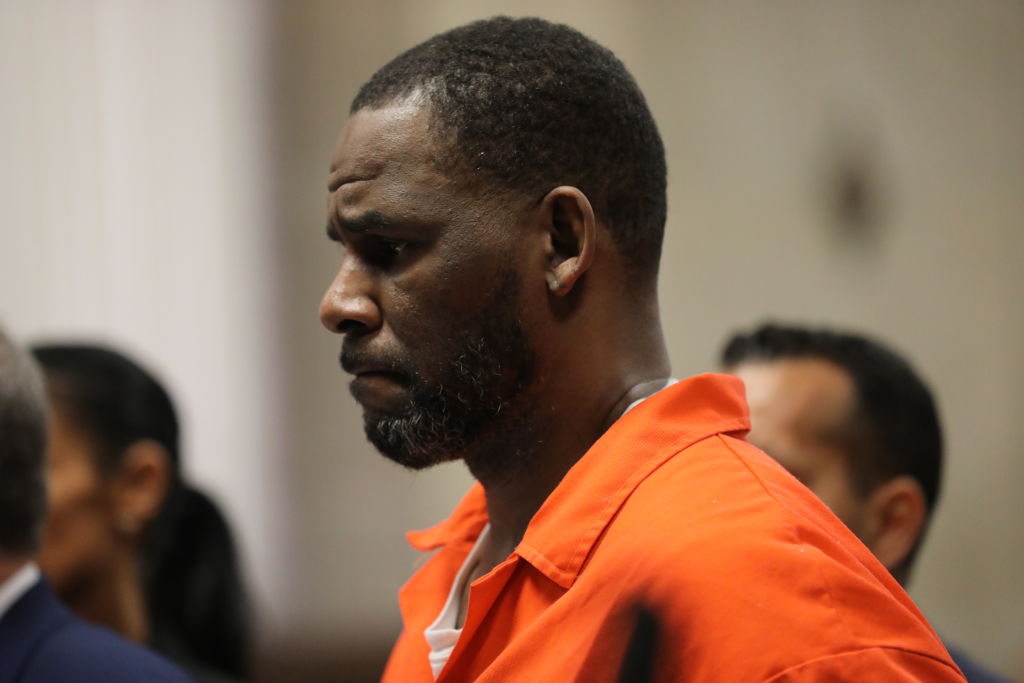
Given President Donald Trump’s passion for helping those beyond bars, Kelly's lawyer thinks he can help.
Disgraced R&B singer R. Kelly is calling for his immediate release from federal prison, claiming the government is trying to have him assassinated behind bars, the Chicago Sun -Times reports.
Kelly’s lawyers spoke outside of the Dirksen Federal Courthouse in Chicago after filing a motion to have the singer released to home detention amid allegations that federal prison officials solicited the help of the Aryan Brotherhood, a white supremacist group, to have him assassinated.
Attorney Beau Brindley made bold claims that the reasoning behind the alleged plans was connected to the “corrupt criminal conduct” of people who “manufactured his convictions.” “We recognize the stunning quality of these allegations, but in the end, these are not allegations made by R. Kelly; these are not allegations made by my office,” Brindley said.
“These are allegations made by men who were solicited.”
The “I Believe I Can Fly” singer is currently serving a 30-year sentence for racketeering and sex trafficking. According to USA Today, inmate and Aryan leader Mikeal Glenn Stine claims officials from the Bureau of Prisons offered to release him early due to a terminal illness in exchange for Kelly being assassinated after being transferred to the Federal Correctional Institute facility in Butner, North Carolina – where Kelly is serving his sentence – and was placed in the same unit.
Stine alleges previous orders from a prison official to instruct other Aryan members to commit beatings and killings. The leader also claims he was promised no conviction if he carried out Kelly’s assassination, permitting him to escape the facility. But after a change of heart, he told the “Ignition” singer about the plan.
Despite the allegations against him, Kelly still has his eyes on freedom and given President Donald Trump’s passion for helping those behind bars, Brindley thinks he can help his client. He admits that the legal team isn’t seeking clemency but more so “ a conversation with the president.” “This is precisely the kind [of] prosecutorial corruption that President [Donald] Trump has vowed to eradicate,” the attorney said.
“We believe [Trump] is the only one with both the power and the courage to do it. And we will surely seek whatever help he can provide us in this fight.”
Federal prison officials declined to comment on “pending litigation or matters that are the subject of legal proceedings.”
While this isn’t Kelly’s first attempt to regain his freedom outside of prison cells, Brindley thinks the five-page declaration –allegedly “signed, sworn and affirmed” by Stine –should be reason enough for the public and a judge to believe him. “To those who would disbelieve him, my question is simple, ‘Why would an avowed white supremacist ensure that the last months of his life will be absolute misery in an effort to try to help R. Kelly of all people?’” Brindley questioned.
“There is no logical answer to that question unless Glenn Stine is telling the truth.”
RELATED CONTENT: R. Kelly Sued By Six Victims Claiming He Owes Them Over $10M Awarded In 2022 Judgment

June 11, 2025
The National Parks Service has been directed to post QR codes that allow visitors to report history that negatively frame American history.
The National Park Service will post signs encouraging visitors to report “disparaging” representations of American History.
On June 9, NPR reported on a leaked memo written by National Park Service comptroller Jessica Bowron, who directs the National Park Service to post signage, including QR codes, that urge observers to challenge historical facts. The signs must be posted by June 13. The National Park Service has aspired to preserve American geography and tell the stories of the past. Yet, the Trump administration wants control over the narrative.
The leaked memo specifies targeting information that “inappropriately disparages Americans past or living and instead focuses on the greatness of the achievements and progress of the American people.”
It is a bold attempt to erase America’s troubled past. America was built on democratic ideals as well as the oppression of multiple minorities, including indigenous peoples and enslaved Africans. Not to speak of these harms removes a crucial and foundational element of the American story.
The impetus for this move comes as the result of an executive order by the Trump administration (“Restoring Truth And Sanity To American History”) that targets multiple government institutions that do not water down history.
The executive orders the presentation of history as “ideology rather than truth.” Multiple institutions dedicated to giving a whole and complete depiction of history are targeted in the document.
A Smithsonian American Art Museum’s exhibit, “The Shape of Power,” is used as an example to further the administration’s agenda.
“The exhibit further claims that ‘sculpture has been a powerful tool in promoting scientific racism’ and promotes the view that race is not a biological reality but a social construct, stating, ‘Race is a human invention.'”
The order sets the National Museum of African American History and Culture and the Smithsonian American Women’s History Museum in its sights while taking a dig at transgender people.
“National Museum of African American History and Culture has proclaimed that ‘hard work,’ ‘individualism,’ and ‘the nuclear family’ are aspects of ‘White culture.’ The forthcoming Smithsonian American Women’s History Museum plans on celebrating the exploits of male athletes participating in women’s sports,” the order states.
RELATED CONTENT: NAACP Fights Back Against Trump’s DOE Executive Order With Lawsuit
June 11, 2025
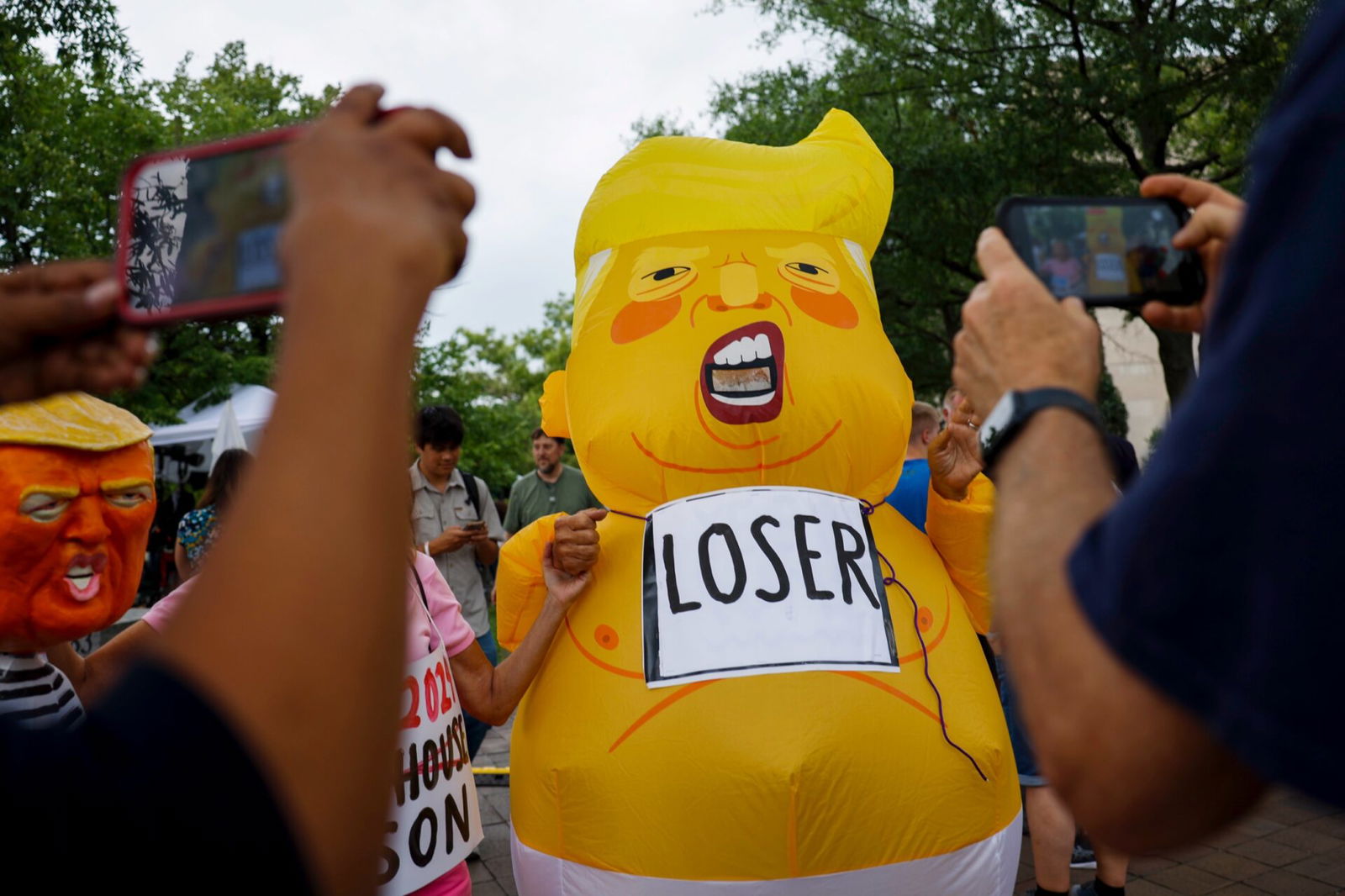
An estimated 7,000 soldiers are expected to march on Saturday, June 14, which is also Trump’s 79th birthday.
As President Donald Trump plans a military parade to showcase America’s military power and honor the Army’s 250th anniversary on Saturday, June 14, Americans are preparing for mass protests, according to NBC News.
An estimated 7,000 soldiers are expected to march on what is also Trump’s 79th birthday. Hundreds of thousands of people are expected to line up along Constitution Avenue.
Reports indicate that organizers are staging protests across all 50 states and in Washington, D.C. A coalition of pro-democracy, labor, and liberal activists is leading the demonstrations to argue that Trump is using the military to promote himself.
“The goal here is to deprive Trump of what he wants in this moment, which is a story about him being the all-powerful political figure of our time, and instead create a contrast with normal people demonstrating that power in this country still resides with the people,” Ezra Levin, co-founder of the progressive group Indivisible, told NBC News.
Levin is helping organize what participants nationwide are calling the “No Kings” demonstration. Early estimates suggest that there could be 1,800 rallies, which could draw millions of participants, said Levin.
The Women’s March is another group arranging protests on the same day and time as Trump’s military parade. With a theme of “Kick Out the Clowns,” organizers expect up to 5,000 attendees to participate in Madison, Wisconsin.
“Nothing feels more absurd than the idea of this president having a massive military parade on his birthday,” Tamika Middleton, chief political and strategy officer of Women’s March, said. “It feels surreal for many of us.”
All of this come among increased protests nationwide over the Trump administration’s handling of undocumented immigrants. Trump mobilized National Guard troops and the Marines after a fallout last weekend with protestors in Los Angeles over immigration enforcement raids. In response, other protests popped up in cities such as Austin, Chicago, Washington, D.C., and San Francisco this week.
RELATED CONTENT: The Unspoken Divide: Morayo Afolabi-Brown Reveals Nigerian Parents’ U.S. Directives That Encourage Division With Black Americans

June 11, 2025
'I would say this is that if they both sat down and just aired this thing out, both guys will be able to move on with their lives,' Magic said in 2020.
Michael Jordan and Isiah Thomas have been feuding for 30 years, and Earvin “Magic” Johnson wants the former rivals to settle their differences.
The rivalry between Jordan and Thomas reached a fever pitch from the late 1980s to 1990s, when they battled for the top spot in the Eastern Conference. Thomas’ Detroit Pistons won back-to-back NBA championships before Jordan’s Chicago Bulls, the Pistons’ fiercest rival, began their reign as the NBA’s best in 1991.
Fast forward to 2020. The release of the massively popular ESPN docuseries, The Last Dance, featured Jordan rehashing his hatred for Thomas.
Magic has long wanted the pair to work things out. The Basketball Network reposted a video of the entrepreneur and hoops legend appearing on The View, in which he made a plea to both gentlemen, who are friends of his, to talk it out.
“Well, you know what, I love both guys, and I hope that both of them can bury this hatchet and move on, because we’re too old for this right now,” Johnson said. “I would say this is that if they both sat down and just aired this thing out, both guys will be able to move on with their lives, and they would say, ‘Hey, you know what, let us be friends, because life is too short.'”
Well, that interview took place five years ago, but in 2023, Thomas did state that he was willing to have a conversation with Jordan.
“I don’t hate anybody. If the brother came here and sat down today and wanted to have an honest conversation—key word, ‘honest’—I’m down for it,” Thomas said while speaking at the ForbesBlk summit in Atlanta.
Publicly, we have yet to see any reconciliation or discussion between the two—despite Magic’s best efforts.
RELATED CONTENT: Magic Johnson Gifts $500K To Xavier University At The Institution’s Centennial Gala
June 11, 2025
O’Hare kicked residents out of the hearing for reasons including clapping and accusing leaders of being racist.
Tarrant County Judge Tim O’Hare is getting the side-eye from Texas residents, county commissioners, and social media users for a video where he aggressively removed constituents for making open comments and attempted to put a fellow leader in her place.
The video shows O’Hare, who is white, trying to push his power against Democratic Commissioner Alisa Simmons, who is Black, during a hearing that would potentially approve a controversial redistricting map of new commissioners’ precincts. When he asked if anyone wanted to speak on the matter, Simmons said yes, but was cut off by O’Hare.
“Hang on, I will recognize who the speakers are. So, you may go,” he said as Simmons, who giggled.
Before concerned residents came to the podium to speak, the judge pushed his chest out a little more and said any outburst, referring to Simmons’s comment, would result in the chamber being cleared—and he meant what he said with “no more warnings.”
One Black man started to speak, seemingly going recalling slavery history; O’Hare interrupted, telling security to have him removed immediately, claiming the man called the leaders racist and he was following the “decorum policy.” That’s when Simmons stepped in to inquire if “racist” was in the so-called policy. The judge responded, telling her to read it and “figure it out.”
Residents and onlookers were specifically pointed out and kicked out left and right for a number of reasons, including clapping. One woman who just asked for the leaders to listen to their concerns over the map was interrupted mid-thought and removed.
Right before O’Hare called for the vote, Simmons let him know that she had an additional comment. Like the others, he tried to stop her, claiming her “time is done.” But she didn’t back down, pushing the judge to take a look at a newly revised version of Robert’s Rules of Order.
And it worked. Simmons delayed the vote by demanding redistricting advisers from the Public Interest Legal Foundation answer questions in front of the commissioners’ courtroom, according to the Fort Worth Star-Telegram.
O’Hare claimed Simmons didn’t have “subpoena power” to make them come into the room, but since her precinct would be affected by the proposed maps, flipping to Republican, Simmons said residents deserve real answers. “They have got to answer to the taxpayers who are paying this bill, and they are going to answer to me out here in public,” she said.
The judge isn’t shy about admitting to his desire for a Republican takeover to increase conservative leadership in Tarrant County and decrease the number of Democrats in the commissioners’ court. The map has received severe criticism for being anti-Black as the county’s 367,000 Black residents represent 18.4% of the population.
“I don’t look at it in terms of race; I look at it in terms of policy. I look at it in terms of results,” O’Hare told Fox 4 News. “The mission is to get three Republican commissioners on the commissioners court.”
June 11, 2025
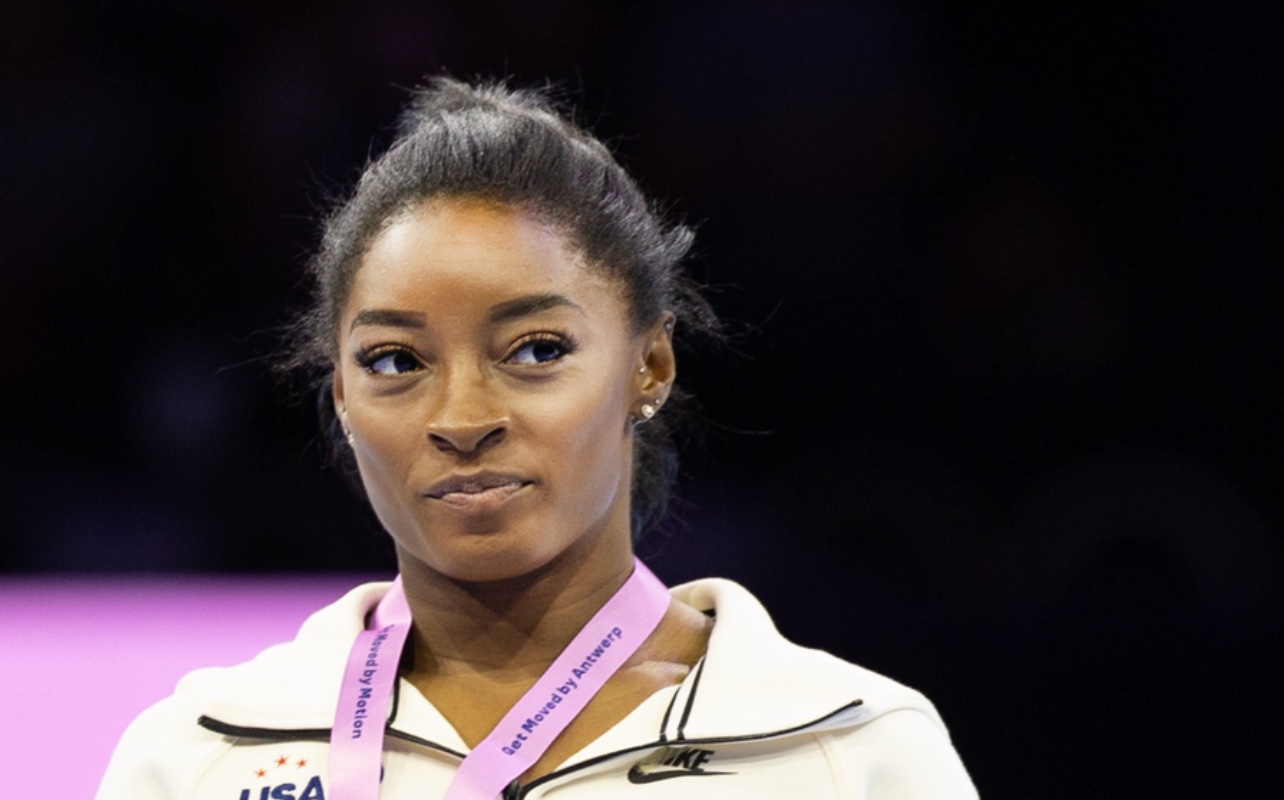
Simone Biles is adding clarity to her recent statements about transgender athletes. She also apologized for “making things personal” with online activist and former swimmer Riley Gaines.
Biles is making headlines for going head-to-head with Gaines, a conservative, ex-NCAA swimmer turned anti-LGBTQIA commenter. Initially, Gaines made a post on X mocking a Minnesota girls’ high school baseball team’s championship win, as one of the athletes is transgender. Gaines sought to diminish the team’s victory by calling the minor a “boy.”
Biles took exception to the attempt at dismissing and mocking the minors’ accomplishment. During the back-and-forth, Simone pointed out Gaines’s rhetoric and divisiveness.
“You should be uplifting the trans community and perhaps finding a way to make sports inclusive OR creating a new avenue where trans feel safe in sports,” she responded.
She also made the conversation personal by bringing up the conservative’s failed professional career. Gaines once tied for fifth place in a professional meet against a transgender athlete. She has rallied against trans-athletes in sports ever since.
“You’re truly sick, all of this campaigning because you lost a race. Straight up sore loser,” Biles posted on X.
On June 10, the Olympic gold medalist followed up her initial post with a more nuanced take that outlined her grievance with Gaines’s commentary. Biles, a true class act and professional, also apologized for drawing attention to Gaines’s personal failures.
“I wanted to follow up from my last tweets. I’ve always believed competitive equity & inclusivity are both essential in sport. The current system doesn’t adequately balance these important principles, which often leads to frustration and heated exchanges, and it didn’t help for me to get personal with Riley, which I apologize for,” she posted.
Biles’s position as the greatest and most accomplished gymnast of all time lends great weight to her words. As such, she explained that the core of her message is inclusivity. While laws are being created to ban transgender athletes from sports, Biles suggests we find a solution to allow everyone to compete. More to her point, she discouraged attacking minors to further anyone’s agenda.
“Individual athletes—especially kids—should never be the focus of criticism of a flawed system they have no control over,” Biles wrote.
Indeed, no singular athlete has control over rules or policy changes. Though players’ unions may have input, the onus is on governing bodies to create, in Biles’s words, rules supporting inclusion while maintaining fair competition.
RELATED CONTENT: Simone Biles Sticks Commencement Speech As Keynote Speaker At Washington University In St. Louis